The Lost Sea of Central Asia: What the Aral Sea's Retreat Teaches Us
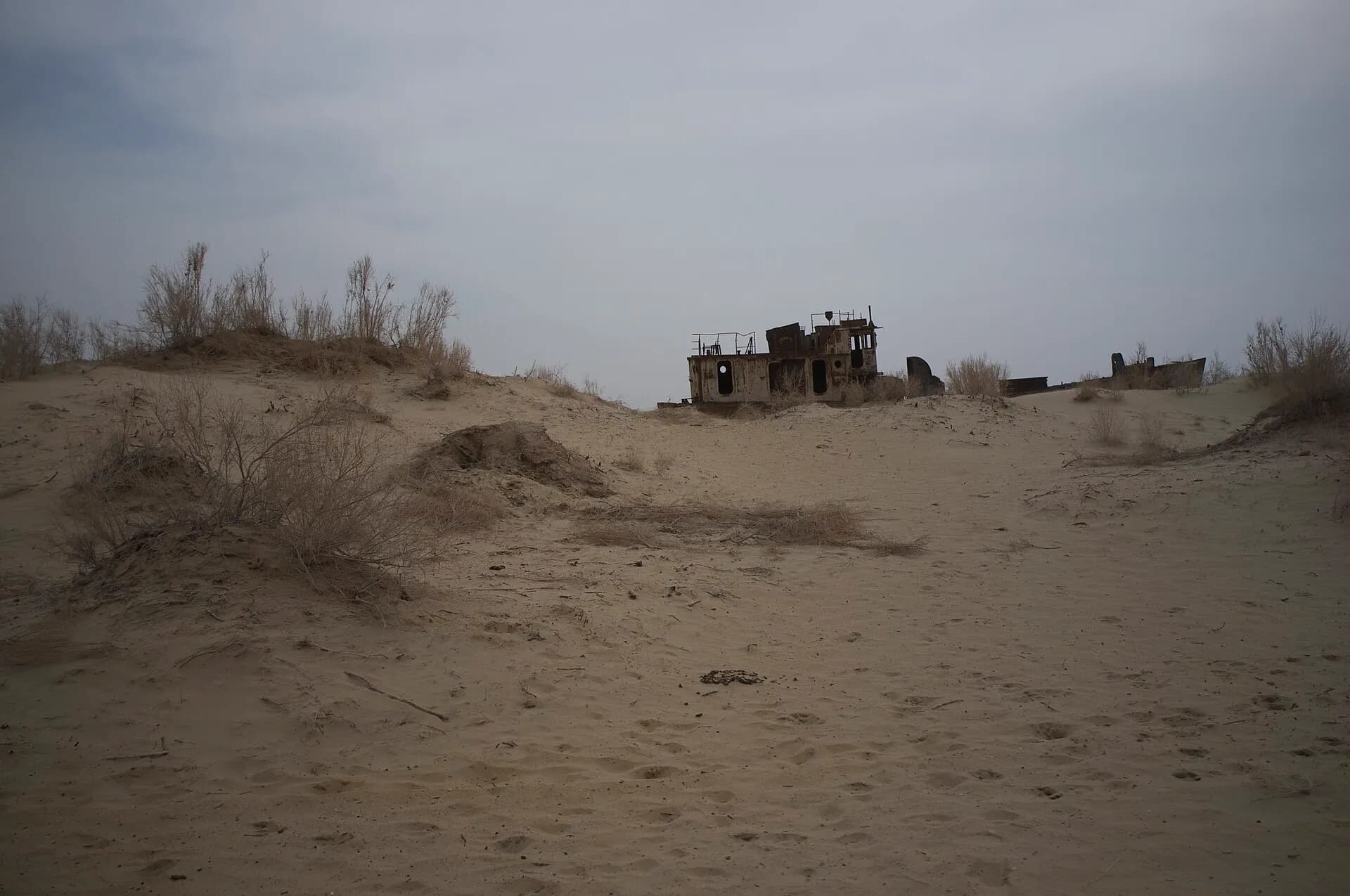
The ships at Muynak are easy to photograph and harder to explain. Their surroundings speak of missing water, but the fuller story includes fishing livelihoods, irrigation decisions and a shared river basin. The Aral Sea was a large inland lake; its dramatic retreat was not a natural disappearance from a distant age.
1. Where the water went
During the Soviet period, large quantities of water from the Amu Darya and Syr Darya were diverted for irrigation. Less reached the lake, and its balance changed. The retreat accelerated from the 1960s. A World Bank account of the basin connects the decline with poorly planned agricultural and industrial development. Cotton expansion was important, but the story concerns the wider management of land, canals and water. Reducing it to one crop alone misses that system.
2. The consequences are not only visual
As the water receded and salinity rose, fishing became harder to sustain. Former shore communities faced lost employment and environmental pressures. The exposed seabed created another landscape, subject to wind and dust. Muynak is still a town where people live, work and plan futures. A museum visit and a conversation with a local guide can place the boats within social history. Avoid captions that describe the whole region as abandoned or imply that its people exist only as witnesses to disaster.
3. Recovery differs between north and south
The Aral is no longer one continuous water body. Kazakhstan's northern section benefited from the Kok-Aral dam, completed in 2005, and improved river management. That recovery should not be presented as restoration of the entire former sea. Farther south, land rehabilitation includes planting on the exposed seabed. World Bank reporting on restoration efforts describes this work. Planting is an effort to stabilize a changed environment, not a promise to refill the lake.
Travel Tip
Muynak's ship cemetery is not a guarantee of reaching today's water edge. Ask for the actual route, driving conditions and overnight arrangements if your trip includes a remote shoreline.
- When: With a locally confirmed road plan and weather check.
- Where: Muynak and the wider Aral region; northern recovery is in Kazakhstan.
- The Vibe: A landscape visit that becomes meaningful through people's history.
Discuss a thoughtful Aral extension with Minzifa Travel. Compare regional itineraries and learn about the company. Cover photo: Stranded vessels at Muynak's ship cemetery in Karakalpakstan. Photo: Aleksandr Zykov from Russia / Wikimedia Commons, CC BY-SA 2.0. Resized for web display.
Kommentare
Hinterlassen Sie einen Kommentar
Noch keine Kommentare. Seien Sie der Erste, der seine Gedanken teilt!