Central Asian Carpet Weaving: Symbols, Dyes and the Loom
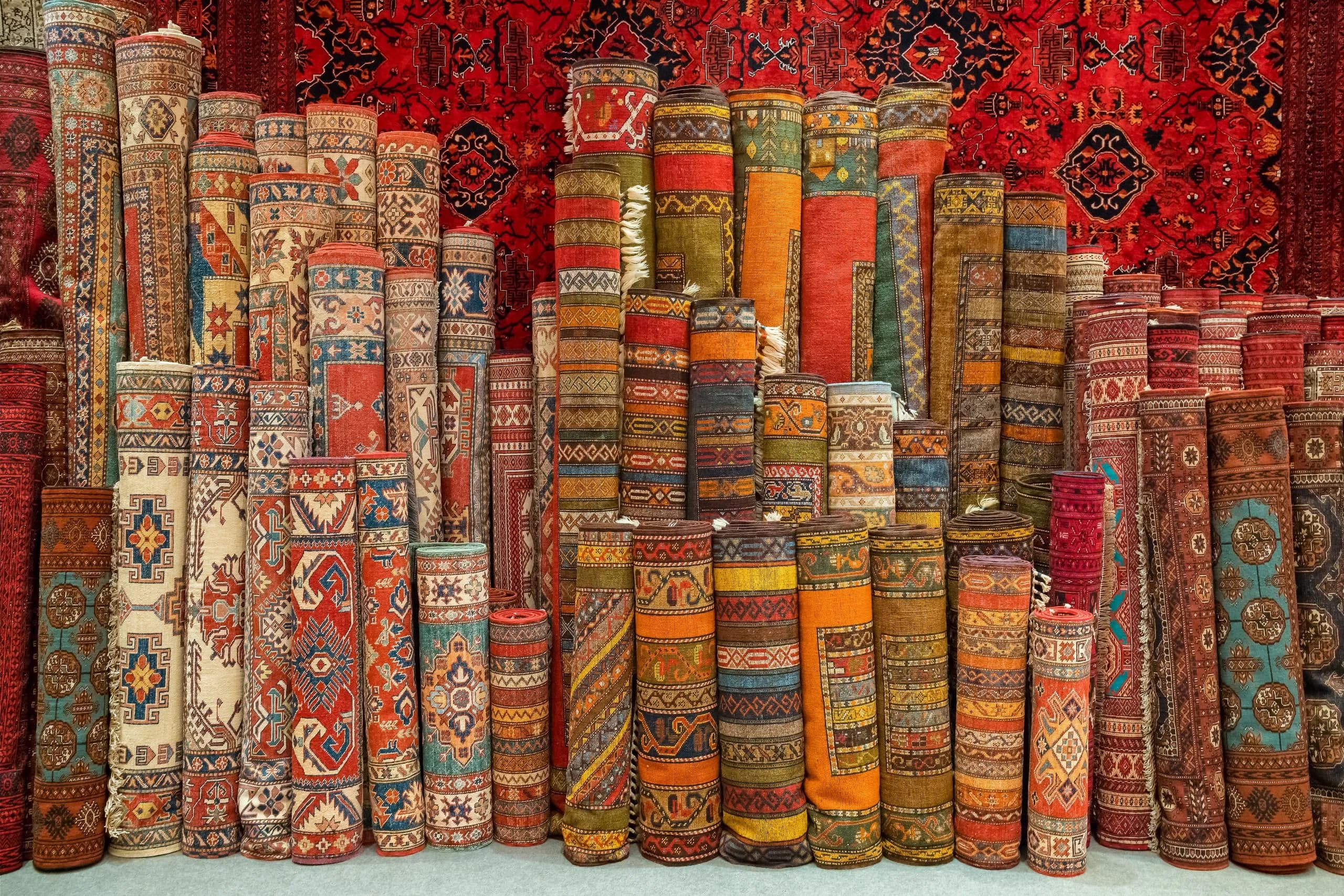
A carpet can be a floor covering, a dowry textile, a trade good or a family keepsake. Across Central Asia, weaving traditions vary by community and region, so there is no single “Silk Road carpet” style. Learn to look at structure first, then ask who made it and what the pattern means to them.
- Read the structure before the pattern
In a workshop or museum, look at the back as well as the front. Carpet collections and weaving studios across Central Asia. Tactile, precise and often more varied than a quick glance suggests. Pile carpets have knotted surface threads; flatweaves create pattern through interlaced warp and weft. Loom type, wool, cotton and silk all affect weight and texture. A guide or craftsperson can show how the structure changes the textile’s use.
- Colors and motifs carry local histories
Ask the maker how a particular design is used in their community. Regional workshops, markets and museum displays. A vocabulary of shapes, with meanings that can shift. Natural dyes were used historically, but modern textiles may also use synthetic dyes. Reds, blues and geometric forms do not have one fixed meaning across the region. Look for repetition, border design and regional technique, then treat symbolic readings as context-specific.
- Buy with a maker’s story
When comparing pieces, ask about fiber, age and production time. Reputable workshops and artisan cooperatives. A thoughtful purchase that supports living skills. Ask whether a carpet is handmade, machine-made, antique or newly woven. Request details about the maker and materials, and be cautious about claims of great age without documentation. Pay fairly and seek export guidance for older or valuable pieces. Turn a carpet over and inspect the knots or weave. The reverse often tells you more about construction than a sales description does. Discover Central Asia with Minzifa Travel tours, learn about Minzifa Travel, or contact our team to plan your trip.
Kommentare
Hinterlassen Sie einen Kommentar
Noch keine Kommentare. Seien Sie der Erste, der seine Gedanken teilt!