The Curse of Timur’s Tomb: Prophecy, Exhumation and the Gur-e-Amir
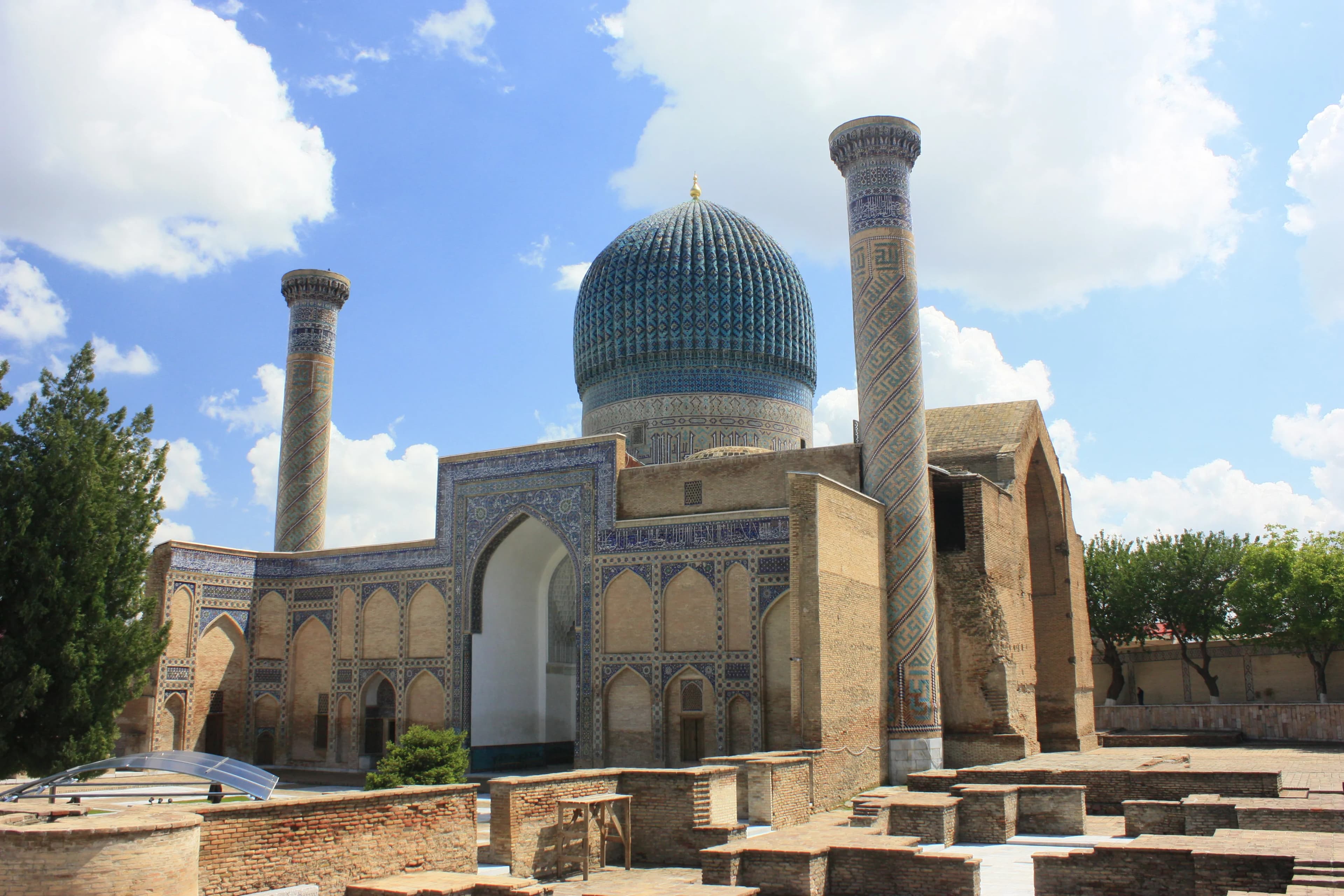
The dark green dome of Gur-e-Amir is one of Samarkand’s most recognizable silhouettes. Around Timur’s tomb, a dramatic story grew: an inscription supposedly warned that anyone disturbing the ruler’s rest would unleash a greater conqueror. The tale is compelling, especially when linked to the 1941 opening of the tomb and the German invasion of the Soviet Union, but the cause-and-effect connection is folklore rather than historical proof.
- What the mausoleum was built for
When: The complex took shape in the early fifteenth century. Where: Gur-e-Amir, in the historic centre of Samarkand. The Vibe: A dynastic monument of blue-green tile, carved stone and quiet grandeur. Gur-e-Amir began as a burial place for Timur’s grandson Muhammad Sultan and became Timur’s mausoleum after the ruler’s death in 1405. The interior combines richly decorated surfaces with a restrained, contemplative atmosphere. A guide can explain the difference between the cenotaphs visible in the chamber and the actual burials below.
- The curse story and the 1941 exhumation
When: The tomb was opened by a Soviet research team in June 1941. Where: The burial chamber beneath the visible memorial markers. The Vibe: A meeting point of archaeology, politics and a powerful modern legend. Researchers exhumed Timur and other members of the dynasty as part of a scientific investigation. The story that an inscription predicted catastrophe, and that the invasion began immediately after the opening, became widely repeated. Exact versions differ; no reliable evidence establishes that the tomb’s opening caused the war. Presenting this as a legend preserves its cultural interest without confusing coincidence with proof.
- Notice the details
When: Visit early to avoid the busiest groups. Where: Courtyard, exterior dome and interior chambers, subject to current access rules. The Vibe: Intimate details inside a monument built for imperial memory. Look for the carved onyx tomb marker traditionally associated with Timur, the luminous dome and the calligraphy. Photography rules may vary, so check signs and follow staff instructions. Modest clothing and a quiet voice are appropriate in this sacred setting.
- Connect Gur-e-Amir to Samarkand
When: Allow about an hour, then continue through the city. Where: Pair it with Registan, Shah-i-Zinda and the Bibi-Khanym area. The Vibe: A layered city whose monuments tell different chapters of power and belief. The mausoleum is easier to understand when seen alongside the Timurid buildings nearby. Leave time between major sites; Samarkand rewards slow looking as much as dramatic wide-angle views. Travel Tip: Ask your guide to distinguish the cenotaphs from the graves below and to explain which parts of the curse story are documented and which are later legend. Explore Samarkand with Minzifa Travel tours, read about Minzifa Travel, or contact our team to plan your visit.
Kommentare
Hinterlassen Sie einen Kommentar
Noch keine Kommentare. Seien Sie der Erste, der seine Gedanken teilt!