The Legendary Fergana Horses: What the Heavenly Steeds Really Tell Us
A horse could once be worth a diplomatic mission. Chinese accounts of Ferghana describe powerful animals prized by the Han court, and the phrase "heavenly horses" gave their reputation an extraordinary afterlife. The story is about real horses and political ambition, even though its most memorable language belongs to legend.
1. Why the Han court wanted them
Ferghana appears as Dayuan in Chinese historical accounts. Horses from the region became objects of negotiation and military pursuit under Emperor Wu. Better mounts mattered to a state facing formidable mounted opponents. The Hong Kong Museum of History's heavenly-horse exhibition explains how these animals also entered Han ideas about divine creatures. Their value was therefore practical and symbolic: a strong horse could serve an army and become an emblem of imperial aspiration.
2. Did they actually sweat blood?
Historical texts use the description, but a phrase preserved in a chronicle is not the same as a modern veterinary diagnosis. Proposed explanations include skin conditions and parasites, as well as embellishment in reporting and poetry. None allows us to diagnose a particular ancient animal. It is more accurate to say that the horses were described as blood-sweating than to promise visitors they can see that phenomenon today. The distinction leaves the fascination intact while keeping the evidence in view.
3. Can you find their descendants?
A modern horse may be beautiful, fast or locally bred without having a demonstrated pedigree stretching back to Dayuan. Claims that a contemporary breed is certainly the unchanged heavenly horse need evidence that appearance alone cannot supply. In the Fergana Valley, explore the history through regional collections and informed discussion. If you arrange a stable visit, ask about the horses' actual breed, training and care. A horse should not be made to perform a supposed historical trait for a camera.
Travel Tip
For riding, choose an operator who matches a horse to your experience and provides appropriate safety equipment. An enjoyable ride does not require a claim about ancient ancestry.
- When: Arrange any stable visit in advance.
- Where: The Fergana Valley; Han horse imagery also survives in museum collections abroad.
- The Vibe: Following an intriguing historical trail rather than hunting a mythical breed.
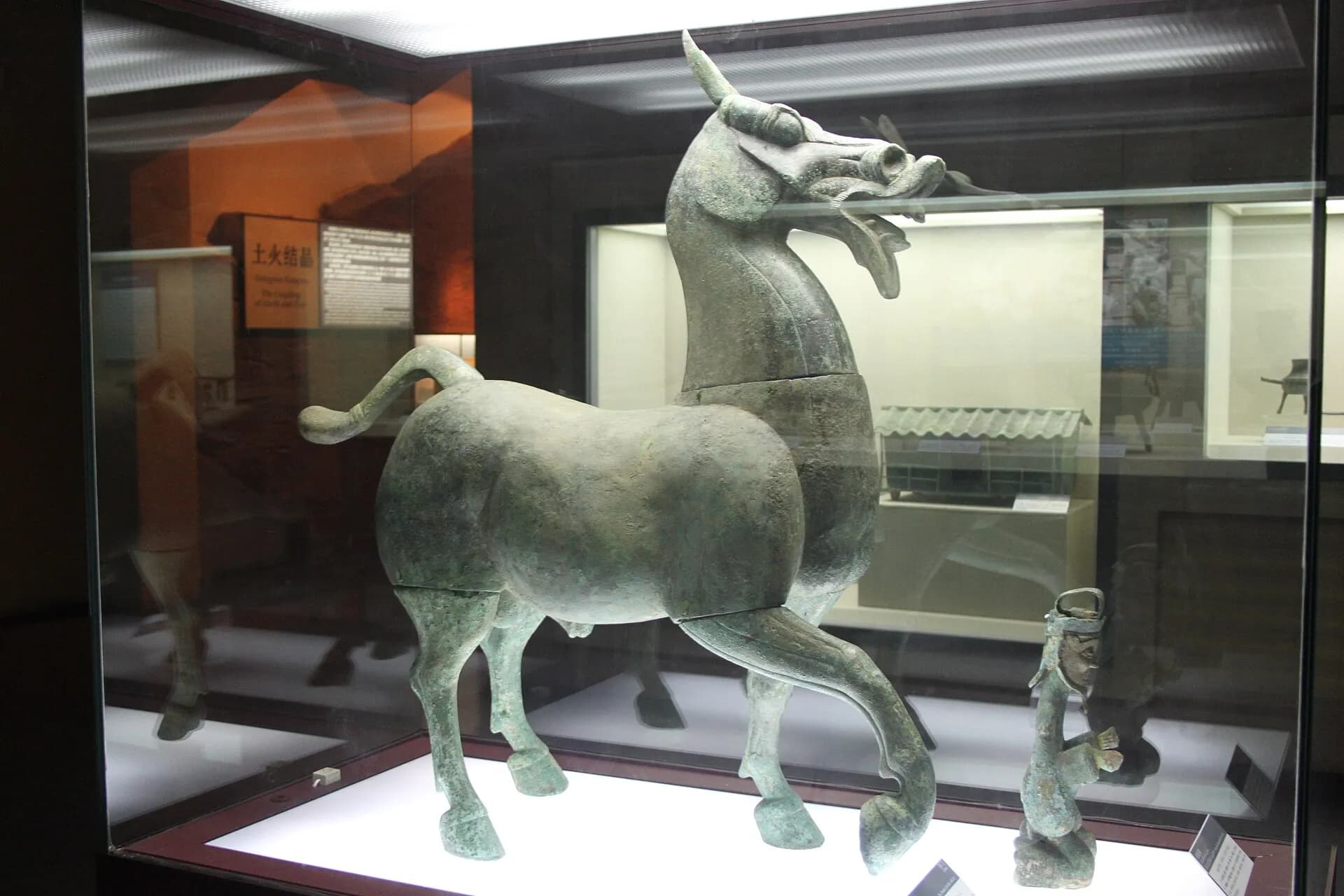
Ask Minzifa Travel about a Fergana extension that connects landscapes with regional history. Browse available journeys and learn about the company. Cover photo: Western Han bronze horse in the Guangxi Provincial Museum, China. Historical horse imagery; not a photograph of a living Ferghana breed. Photo: Gary Todd / Wikimedia Commons, CC0. Resized for web display.
Kommentare
Hinterlassen Sie einen Kommentar
Noch keine Kommentare. Seien Sie der Erste, der seine Gedanken teilt!