Mosaic vs. Majolica: Tilework Techniques of Samarkand and Bukhara
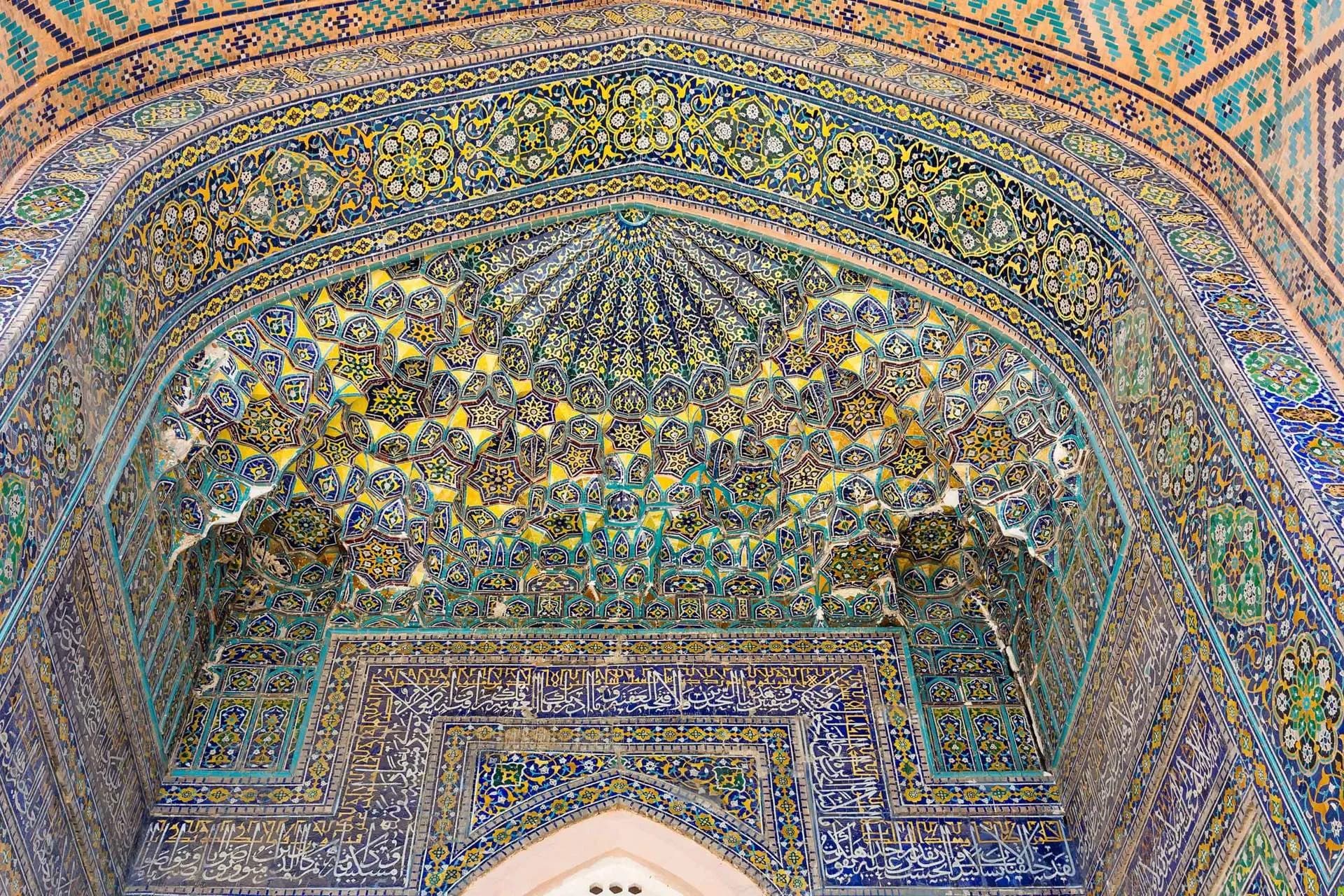
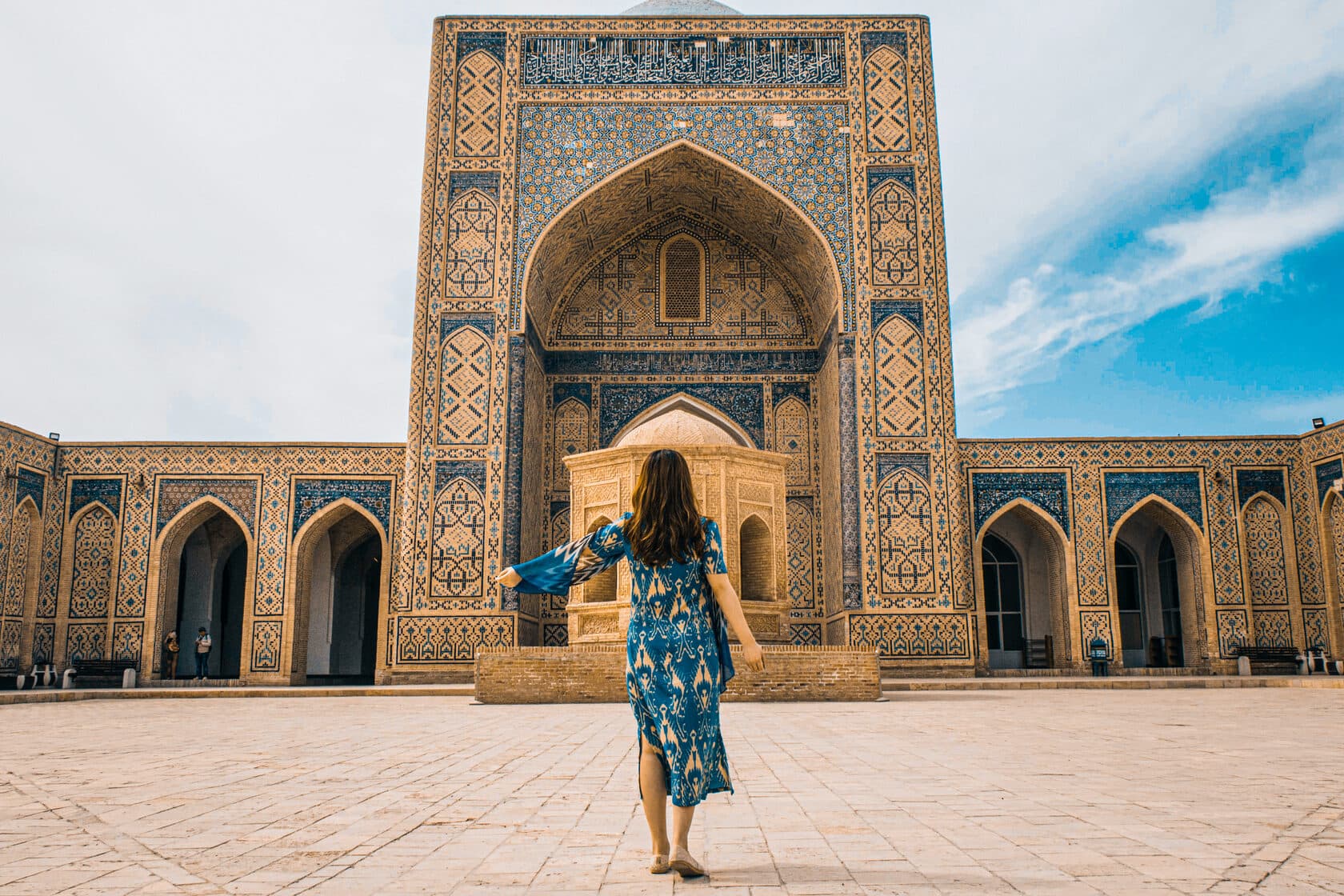
Blue domes and patterned portals are among Uzbekistan’s most recognizable sights, but “mosaic” and “majolica” are not interchangeable labels for every tile. The terms describe different approaches to making and assembling decorated surfaces, and usage can vary between sources. A close look at color, joints and pattern helps visitors appreciate the craft.
- Mosaic: building a pattern from pieces
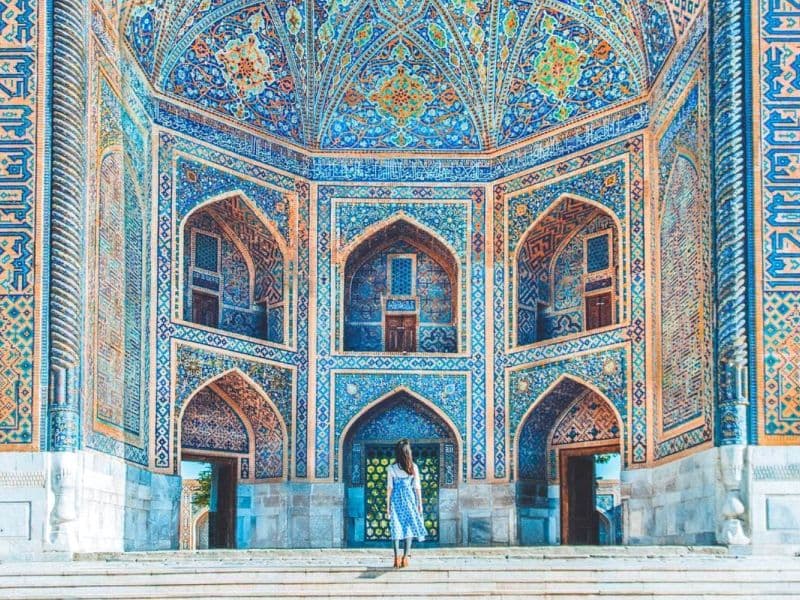
When: Look closely at geometric panels and curved surfaces. Where: Registan, Shah-i-Zinda and major Samarkand monuments. The Vibe: Tiny color units combine into precise, repeating designs. In a mosaic technique, individual pieces are cut or shaped and assembled to form a larger image or pattern. On complex surfaces, careful planning lets artisans carry geometry around corners and domes. Modern repairs may use different materials, so ask which sections are historic.
- Majolica and glazed decoration
When: Compare tile panels from several buildings rather than relying on one label. Where: Samarkand and Bukhara monuments, including madrasas and mausoleums. The Vibe: Glossy color, painted motifs and a durable architectural skin. Majolica is often used for decorated glazed earthenware, though regional architectural terminology is not always consistent. Some Central Asian surfaces combine different tile-making and setting methods. A guide or museum label can clarify the local term and the specific technique visible.
- How to look like a careful visitor
When: Visit in daylight and avoid touching the walls. Where: Tile facades, borders, inscriptions and restored sections. The Vibe: A visual field of craft, geometry and conservation. Notice whether a design is made of many small pieces or broader painted tiles; then look at how grout lines and borders shape it. Avoid treating every star or color as a fixed religious code. Restoration is part of the building’s present story.
- Learn from workshops responsibly
When: Book a demonstration with a local artisan where available. Where: Craft studios in Samarkand, Bukhara or nearby workshops. The Vibe: Hands-on learning connected to living skills. Ask how long a panel takes, what tools are used and whether materials are traditional. Pay fairly for demonstrations and finished work, and ask permission before photographing makers. Travel Tip: Photograph a tile panel straight-on and close-up; comparing the two views helps reveal how individual units create the larger pattern. Explore Uzbekistan with Minzifa Travel tours, learn about Minzifa Travel, or contact our team to plan your trip.
Kommentare
Hinterlassen Sie einen Kommentar
Noch keine Kommentare. Seien Sie der Erste, der seine Gedanken teilt!