The Mystery of Kalyan Minaret: Brick Engineering Through Earthquakes and Conflict
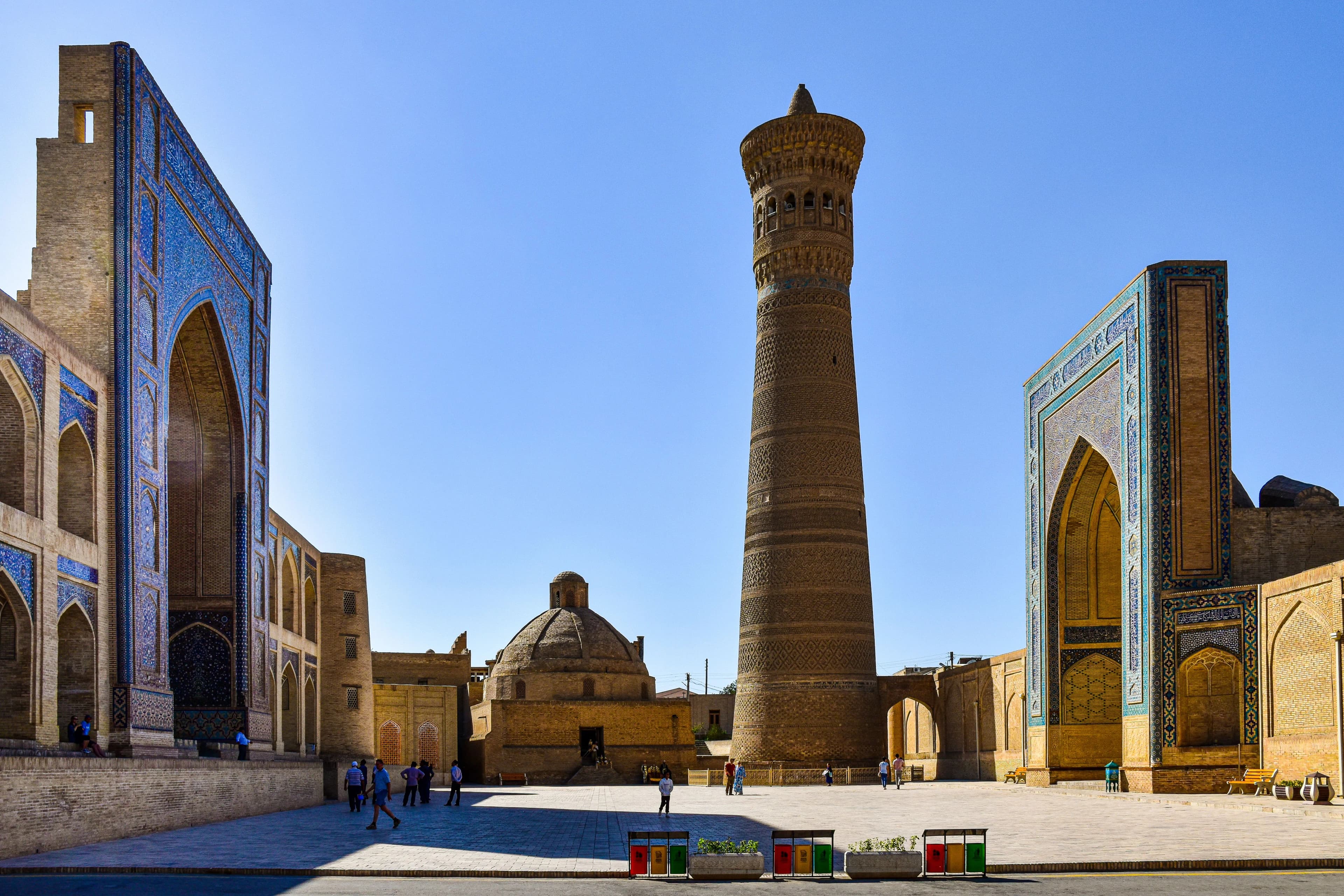
Bukhara’s Kalyan Minaret has stood for centuries, surviving political upheaval and the stresses of time. Its endurance invites stories of invulnerability, but the more useful explanation is architectural: carefully laid brick, a tapering profile, a broad base and ongoing conservation. No historic tower is immune to earthquakes or neglect.
- A tower built to last
When: View the minaret from Poi Kalyan in morning or late-afternoon light. Where: The historic centre of Bukhara. The Vibe: Slender above, broad below, with brick patterns that reward close inspection. The minaret dates to the early twelfth century and is built primarily of fired brick. Its shaft narrows as it rises, distributing weight toward a broad foundation. Decorative bands are also part of the masonry surface, not a separate stone skin.
- What engineering can explain
When: Ask a guide to point out the base, shaft and transitions. Where: Poi Kalyan courtyard and nearby viewing lanes. The Vibe: A lesson in proportion, material and structural continuity. Good masonry, geometry and a stable base likely contributed to durability. The tower has also experienced repairs and conservation over its long life. Claims that a single secret technique made it earthquake-proof are not supported; performance depends on ground conditions, maintenance and the severity of each event.
- Siege stories and the “Tower of Death” name
When: Hear local versions while keeping documented use distinct from legend. Where: The minaret and surrounding historic square. The Vibe: A potent landmark with a complicated public memory. The nickname is associated with stories of executions, but accounts of its meaning and use vary. Treat dramatic tales as part of local memory, not a complete construction history. Respect current access limits and do not climb on the monument.
- Combine with Bukhara’s old city
When: Allow at least an hour for Poi Kalyan, then explore the lanes. Where: Poi Kalyan, trading domes and Lyabi-Hauz. The Vibe: Architecture embedded in a living city. A guide can explain conservation and historical phases. Dress respectfully near religious spaces and check whether interiors are open. Travel Tip: Notice the minaret’s taper and brick bands from several angles; the structure is best understood through its proportions, not a single close-up. Explore Uzbekistan with Minzifa Travel tours, learn about Minzifa Travel, or contact our team to plan your trip.
Kommentare
Hinterlassen Sie einen Kommentar
Noch keine Kommentare. Seien Sie der Erste, der seine Gedanken teilt!