First-Time Horse Riding in Kyrgyzstan: Picking the Right Guided Experience
Your first experience of horse riding in Kyrgyzstan should begin with learning how to sit, stop and communicate, not with being sent towards a mountain pass. The landscape is inviting, but a horse is not transport that removes every physical demand. A suitable introductory ride is a distinct activity from a multi-day horse trek.
1. Ask for instruction before asking how far you can go
Tell the provider that you are a complete beginner, including any uncertainty about mounting, balance or heights. Ask how the instructor assesses your confidence, matches the horse and explains basic controls in a language you understand. Do not describe yourself as experienced because you once sat on a horse for a photograph.
Look for a short introductory format with an appropriate practice area and a clear option not to continue. The exact duration and route should follow the assessment, not be copied from another traveller's experience. Ask whether individual supervision or a led ride is available and how many riders each guide will oversee. Confirm how you reach the riding base, whether a return vehicle transfer is included and where non-riders can wait.
| Offer | What makes it useful | What to question |
|---|---|---|
| Introductory session | Instruction and a chance to assess comfort | Leaving immediately without a briefing |
| Gentle guided outing | Terrain and pace chosen for the actual rider | An undefined route labelled easy |
| Mixed-ability group | Separate arrangements for beginners | Pressure to keep up with faster riders |
| Mountain horse trek | A separate, more demanding commitment | Being sold as a substitute for learning |
2. Make equipment and horse welfare non-negotiable
The British Horse Society's helmet guidance emphasises a correctly fitted, secured riding helmet. Ask what recognised standard the supplied helmet meets, whether a suitable size is available and how its condition is checked. A bicycle helmet or a decorative hat should not be presented as equivalent riding protection.
Ask the provider about appropriate footwear and clothing for its tack and terrain. Have the guide check the fit of equipment before starting. If suitable safety equipment or understandable instruction is unavailable, decline the ride rather than treating the lack of alternatives as a reason to proceed.
Also look at the horse's condition, workload and how it is handled. Ask how rider size and ability are matched to the horse, and whether it gets appropriate rest and care. Avoid a provider that dismisses obvious distress or encourages rough treatment.
3. Choose terrain and season around the rider
A gentle outing does not need a steep slope, river crossing, gallop or exposed ridge to be worthwhile. Ask for the ground conditions, any traffic interaction and how you return if you become uncomfortable. Riding can still strain your back, hips and knees; discuss relevant health concerns with a clinician beforehand.
Mud, ice, snow, heat or thunderstorms may make an otherwise suitable outing inappropriate. The guide should reassess conditions on the day and explain cancellation or replacement arrangements. No month can guarantee a safe ride.
Confirm that your travel insurance covers the actual riding activity, any altitude involved and emergency assistance. A provider's assurance that "everyone can ride" is not an insurance policy or an individual suitability assessment.
Travel Tip
Judge a first ride by whether you felt informed and well supervised, not by distance covered. Staying with a calm introduction, or choosing not to mount, is a valid outcome.
- When: After discussing experience, equipment, health considerations and the day's conditions.
- Where: A provider-assessed introductory setting, not an ambitious mountain route.
- The Vibe: Learning at your own pace, with respect for both rider and horse.
Ask about suitable guided activities, explore Minzifa Travel tours, and read about the team coordinating your trip.
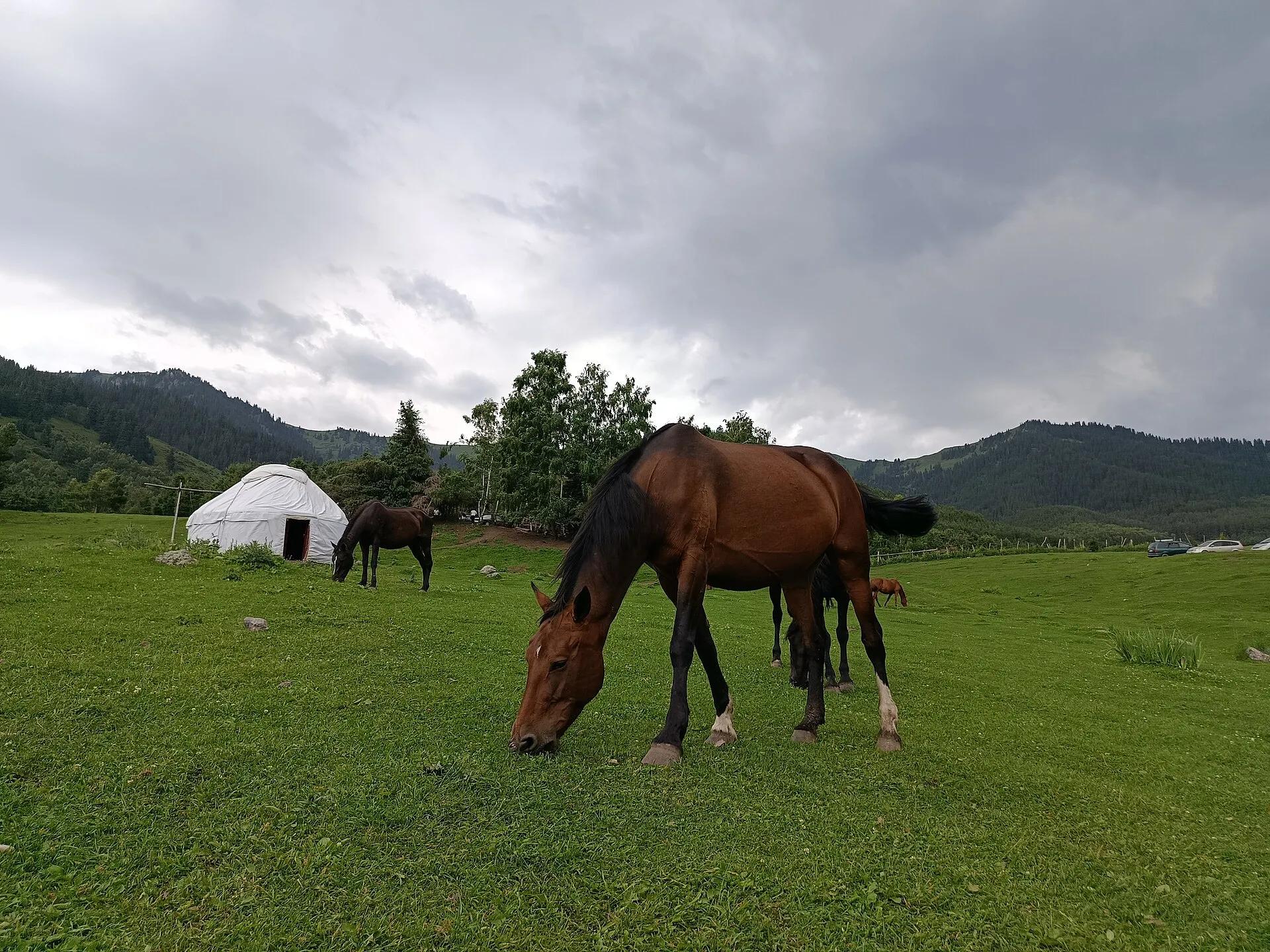
Cover photo: A horse grazing on Kerege-Tash pasture in Ak-Suu District, Kyrgyzstan. Landscape and animal illustration, not the horse, equipment or route of a booked lesson. Source: Wikimedia Commons: Horse grazing on Kerege-Tash pasture Ak-Suu District 2026 05.jpg. Photo: AseinMad. License/status: CC BY-SA 4.0. Resized and converted for web display. The photograph remains available under the stated terms.
Comments
Leave a comment
No comments yet. Be the first to share your thoughts!