A Small Cap, Many Identities: Reading the Do‘ppi Beyond the Souvenir Stall
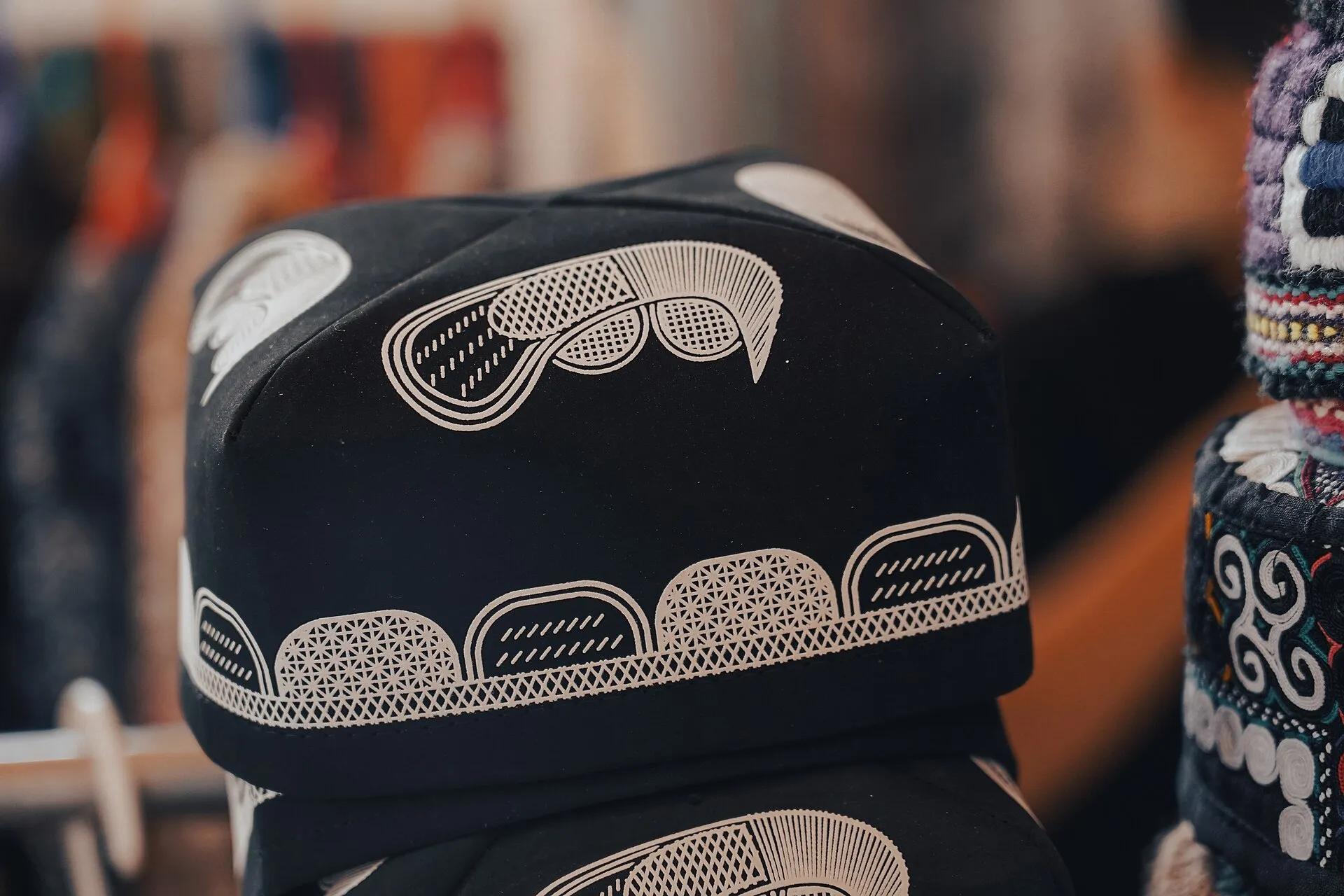
One small cap can carry remarkably different impressions: restrained black and white, dense floral color or the glitter of gold embroidery. The tubeteika is not one standardized Central Asian hat. In Uzbekistan, where the name do‘ppi is used, comparing examples reveals local styles, personal taste and the occasion for which a cap was made.
1. Chust is a starting point, not the whole story
The familiar Chust style combines a dark ground with contrasting white motifs and an ornamental border. Its strong visual identity makes it easy to recognize, but it should not stand in for every Uzbek skullcap. The official tourism overview describes regional groups including Tashkent, Bukhara, Samarkand, Fergana and Khorezm-Karakalpak traditions. Shape, fabric and decoration offer more useful clues than color alone. The cover photograph shows a Chust-style cap photographed in Bukhara: a place of sale is not necessarily a place of manufacture.
2. Compare the work before decoding the symbol
Turn your attention to the stitches, joins and edge braid. Uzbekistan’s heritage inventory of skullcap embroidery describes different materials and techniques, alongside both handmade and industrial production. Ask a maker which stages were done by hand and how the cap was shaped. A neat interior and carefully finished edge can be as revealing as a decorative crown. Regional traditions also develop: a new color or motif does not automatically make a piece culturally meaningless.
3. Protective meanings are stories to explore respectfully
Some motifs are explained through wishes for protection, family well-being or good fortune. The tourism account explicitly presents certain protective interpretations as legends. Their cultural importance does not require treating them as literal powers or one authoritative code accepted by every wearer. Ask, “What do you call this pattern here?” before asking what it means. The answer may connect a shape to a family’s practice, a local name or a ceremonial occasion. A cap can express identity through use as well as ornament.
Travel Tip
Before buying, ask about fit, materials, care and where it was made. Seek permission before trying on a cap, especially one belonging to a person rather than a shop display. Do not assume someone’s beliefs or marital status from a pattern alone.
- When: During a craft visit or an unhurried market conversation.
- Where: Across Uzbekistan, with related but distinct headwear traditions elsewhere.
- The Vibe: Regional variety and patient embroidery in an everyday-sized object.
Explore craft-focused travel, contact Minzifa Travel, and read about the team.
Comments
Leave a comment
No comments yet. Be the first to share your thoughts!