What to Eat in Central Asia — By Country, Without the Brochure Version
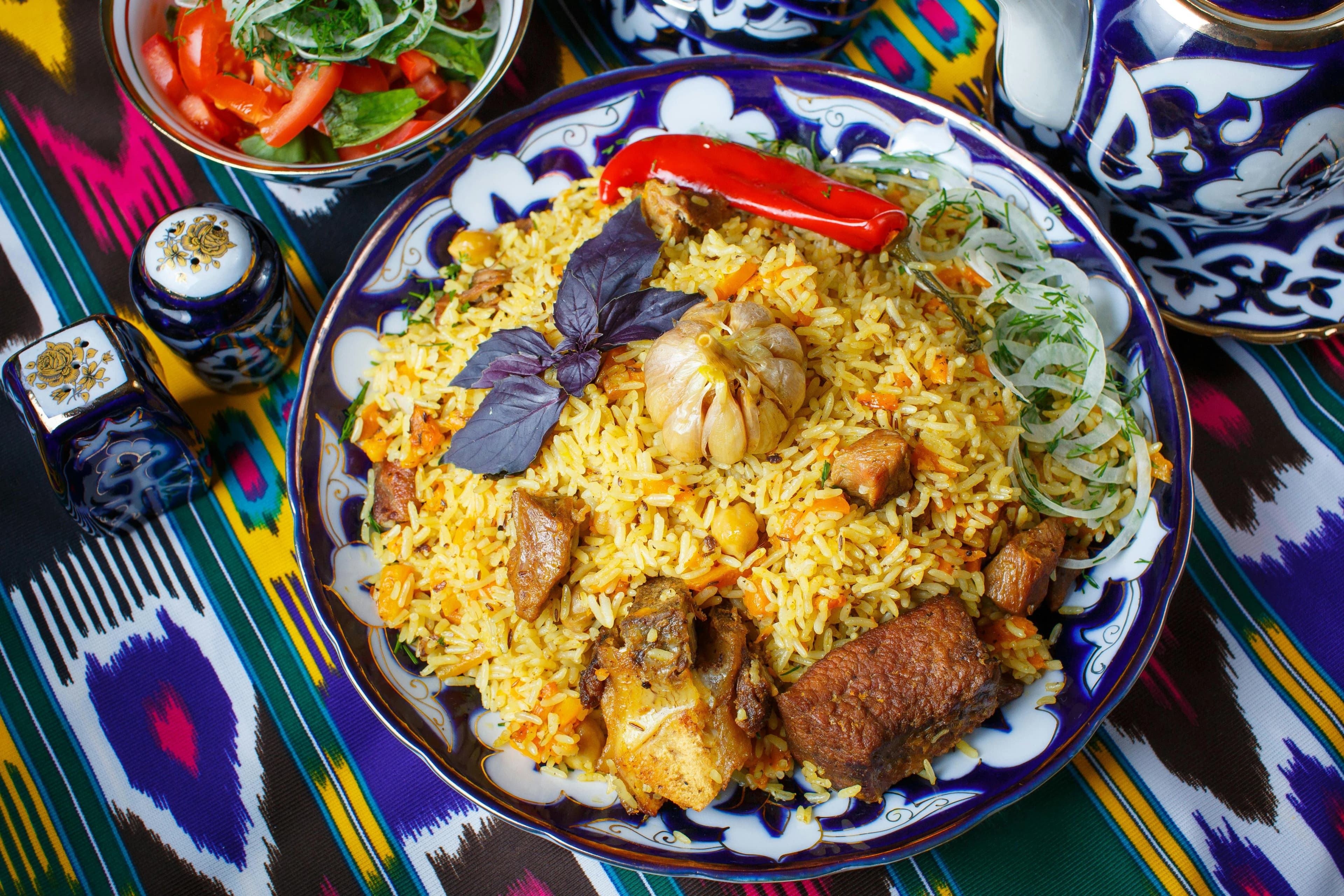
Which is mainly that it doesn't have much of a reputation at all. People who haven't been assume it's heavy, limited, and repetitive — lots of mutton, lots of bread, not much else. What it actually is, is honest. The ingredients are fresh because they've been grown nearby, the recipes haven't been designed for Instagram or adapted for foreign palates, and the portions are sized for people who've been working since 5am. I'll go country by country because the food across the region is genuinely different. ** **Uzbekistan. Start with plov, because you'll hear about it within minutes of landing and you should eat it correctly. It's rice cooked in lamb fat with carrots, onion, and various additions that change by region and by family — there are over 200 regional variations, and people here care about this the way Italians care about pasta. The best way to eat it is from a huge cast-iron cauldron at a chaikhana (tea house) at lunch, with a pot of green tea and a piece of bread. The experience of sitting surrounded by locals who are all eating the same thing with the same focused concentration is one of the more pleasant ways to spend an hour anywhere. Samsa are baked pastries filled with lamb and onion, made in tandoor ovens, and cost about 30 cents at a bakery. Shashlik is skewered grilled meat — lamb, beef, sometimes chicken — served with raw onion and flatbread, almost always good because the people doing it over charcoal have been doing it for decades. The bread deserves its own paragraph. Uzbek flatbread — non or obi non — comes from clay tandoor ovens and is unlike bread anywhere else. Slightly chewy crust, soft interior, stamped with a pattern before baking. You're not supposed to put it upside down, which is a cultural thing about bread being treated as sacred, and you should eat it warm from the oven whenever you get the chance. At every bazaar you'll see stacks of it. Buy a loaf and eat it in the street while it's still hot. ** **Kyrgyzstan. The food here reflects nomadic history more than anywhere else in the region. Beshbarmak is the national dish — boiled meat, traditionally horse but also lamb, served over flat noodles with onion broth. The name means "five fingers" because it was traditionally eaten by hand. It's a communal dish meant for gatherings, and eating it in someone's home or yurt is the right context. Kumis is fermented mare's milk, slightly fizzy, mildly alcoholic, and sour in a way that's genuinely hard to describe. Most Western travellers try it once and politely don't finish it. That's fine. The point is to try it. Shorpo is a clear lamb broth soup — simple, restorative, exactly right after a long day on a mountain road. ** **Kazakhstan. Similar nomadic roots to Kyrgyzstan, so horse meat appears here too. Qazy is a cured horse sausage served cold, worth trying if you find it at a bazaar. Baursak are fried dough balls that show up at celebrations and family meals and taste somewhere between a doughnut and a dinner roll. Tea in Kazakhstan is black tea served with milk, different from the green tea of Uzbekistan, and usually comes with a spread of dried fruit, sweets, and biscuits on the side. ** **Tajikistan. More Persian influence than the other countries, which shows up in a greater emphasis on fresh herbs and yogurt-based dishes. Qurutob is the one to try: flatbread soaked in yogurt sauce and topped with vegetables and herbs. It sounds simple and it is, but the balance of flavours is genuinely good and it's one of those dishes that doesn't translate well into a description but makes sense immediately when you eat it. ** **One practical note for vegetarians. You can manage but it takes more planning than in Southeast Asia. Meat is central to most traditional dishes, but bread, salads, vegetable soups, and meat-free plov exist, and bazaars everywhere are full of fresh produce. If you have dietary restrictions, tell us before you book and we'll factor it into the recommendations and guide briefings. The best eating in this region consistently happens in places without English menus. If you see a menu laminated and translated into six languages, walk a little further. The plastic chairs and handwritten sign version is where the food is.