Before the Next Stage: How Caravanserais Kept the Silk Roads Moving
A caravan could carry valuable cloth and still be stopped by a much simpler problem: no reliable water at the next stage. Caravanserais belonged to the practical network that made long-distance movement possible. Their story is as much about animals, supplies and local knowledge as it is about merchants meeting beneath an impressive gateway.
1. The animals helped determine the journey
Pack animals needed rest, water and fodder. The resources available along a route therefore shaped what a caravan could carry and how far it could go. An ICOMOS Silk Roads thematic study discusses these constraints on transport. Imagine arriving with tired animals and goods that must stay dry and secure. Shelter is only one requirement. Unloading space, access to supplies and a workable departure the next morning also matter. Reading an inn through these needs makes its layout easier to understand.
2. A network was not a standardized hotel chain
UNESCO's Silk Roads overview describes caravanserais as places for rest, preparation and exchange. Their services and spacing varied with geography, prosperity and the period concerned. A neat chain of identical inns at fixed intervals is too simple a picture. Meeting other travellers also offered opportunities to exchange news and make commercial contacts. Yet a protected courtyard did not eliminate every risk, and not every traveller followed the same itinerary from one end of Eurasia to the other. Goods could change hands many times.
3. Read Rabati Malik together with its water infrastructure
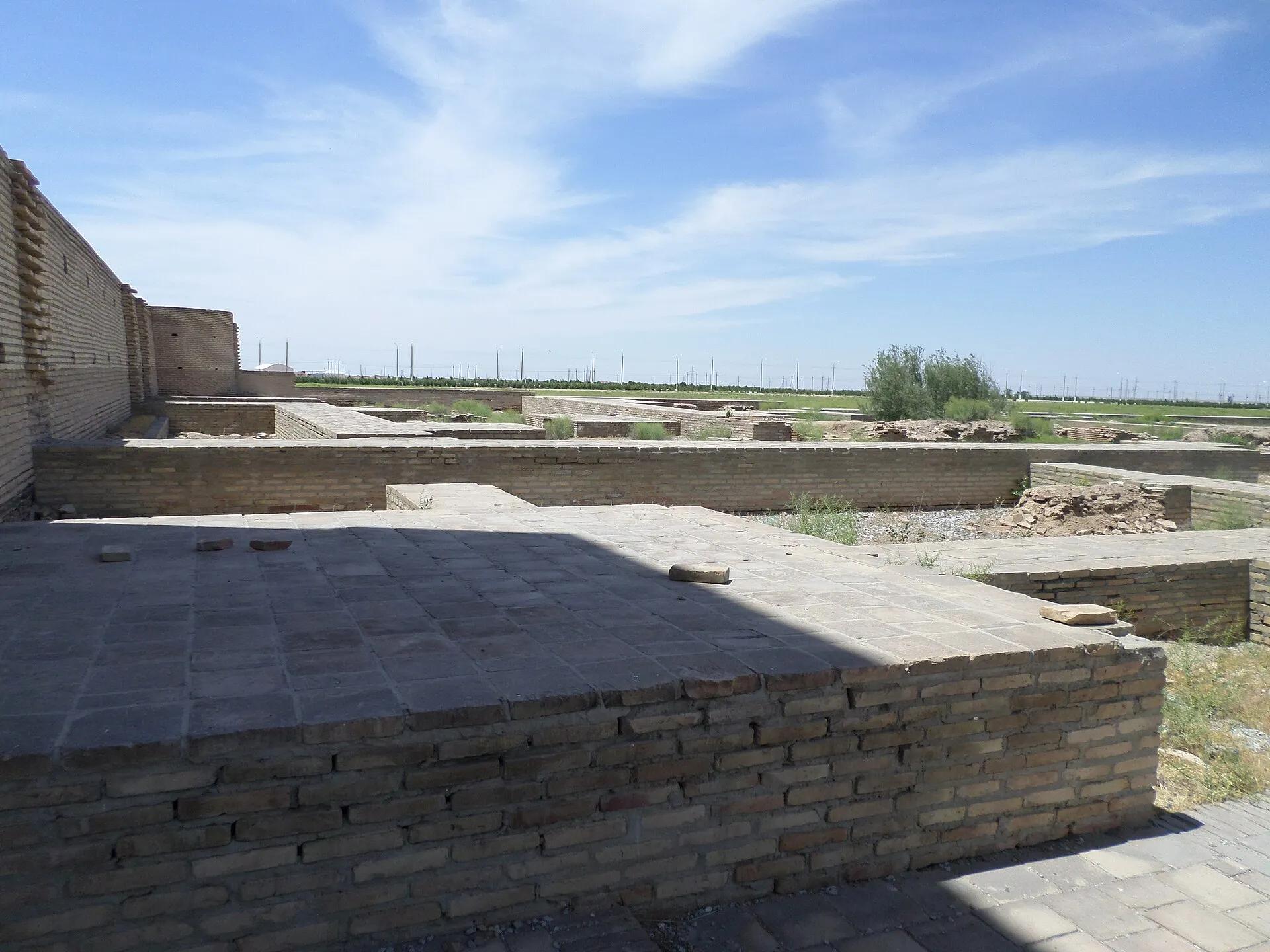
Near Navoi, Rabati Malik offers a useful stop between the great historic cities. Its surviving portal attracts attention, but the excavated plan and nearby sardoba, or covered reservoir, invite a more practical reading. The published heritage description treats the caravanserai and water structure together. Look at their relationship in the landscape rather than assuming every visible feature was built at precisely the same time. The cover photograph shows excavated remains, not a complete medieval inn.
Travel Tip
Ask for enough stopping time to discuss both the building and water supply. Do not enter closed archaeological areas or assume that a heritage reservoir provides drinking water today.
- When: During a planned road transfer, with conditions checked locally.
- Where: Rabati Malik and Malik Sardoba in Uzbekistan's Navoi region.
- The Vibe: Seeing the support system behind the famous journey.
Browse Silk Road tours, ask Minzifa Travel about this stop, and learn who designs the routes.
Cover photo: Excavated remains at Rabati Malik, Uzbekistan.
Comments
Leave a comment
No comments yet. Be the first to share your thoughts!