Reading a Chapan: Patterns, Prestige and the Stories Behind Central Asian Robes
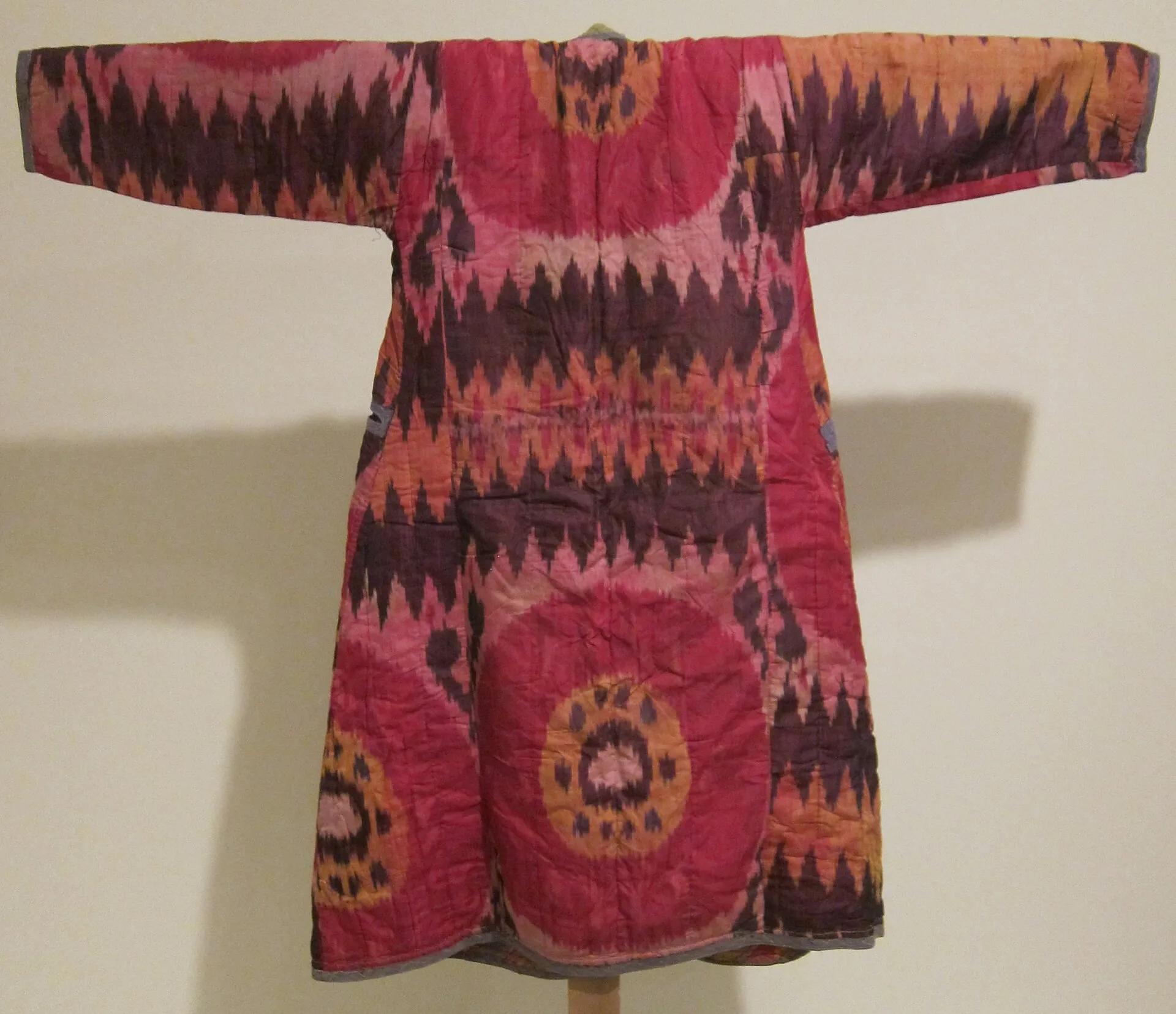
Turn a chapan inside out and a second story may appear. Behind a bold patterned exterior there can be striped cloth, printed flowers or patches that belong to a different textile tradition. These robes are fascinating not because every shape has a secret translation, but because fabric, construction and use bring several histories into one garment.
1. Begin with how the pattern was made
A chapan is a robe, not the name of one decorative technique. Examples may be striped, embroidered or made from ikat cloth. In warp ikat, threads are bound and resist-dyed before weaving; the characteristic softened edges belong to that process, not necessarily to fading or careless work. The Textile Museum of Canada’s Uzbek chapan pairs a silk ikat exterior with a Russian factory-printed lining. Look at that combination as evidence of choices and connections, rather than expecting every part of a traditional garment to have been made in one village.
2. Clothing could communicate standing and generosity
Expensive material and elaborate workmanship could make a robe a visible expression of prestige. The Powerhouse Museum’s account of a Bukhara chapan describes decorated robes as displays of status and as gifts associated with honor and reward. That social meaning need not depend on deciphering a single motif. The quality of the cloth, the occasion and the relationship between giver and wearer can matter as much as the design. A working garment and a ceremonial gift should not automatically be read in the same way.
3. Ask for a story, not a symbol dictionary
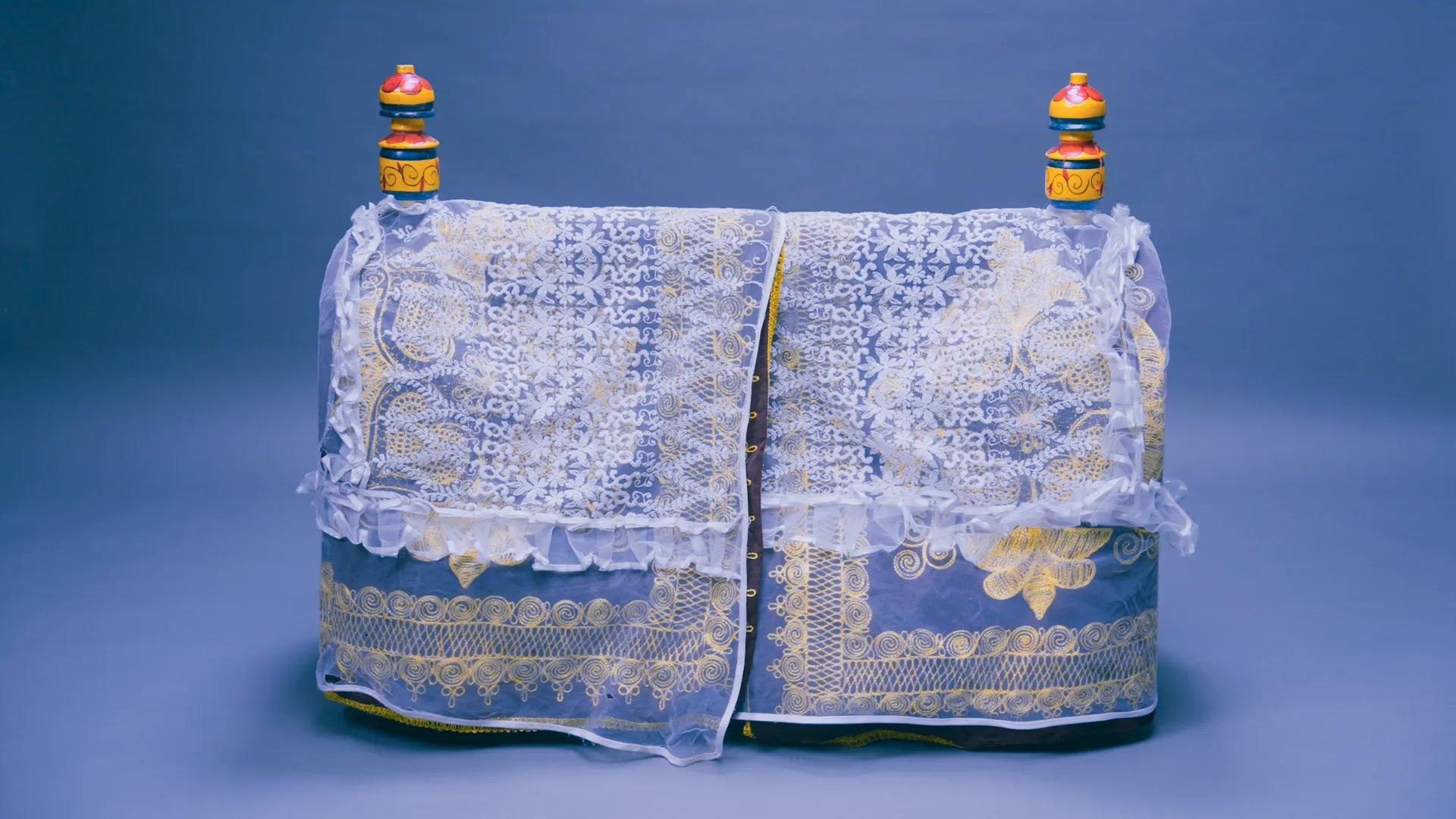
At a textile display, choose one repeated form and ask what the museum label or maker calls it. Then ask whether that name identifies a shape, a workshop convention or a locally remembered meaning. A flower-like outline is not proof of one unchanged belief across Central Asia. The cover shows a twentieth-century Uzbek chapan in the Honolulu Museum of Art. Its large patterns offer an invitation to compare scale and color, not a key that unlocks every robe you will encounter.
Travel Tip
If shopping, ask where the fabric was woven, who made the garment and whether the decoration is woven or embroidered. Request permission before trying it on; a museum object is never a dressing-up prop.
- When: During a textile museum or craft-shop visit with time for questions.
- Where: Uzbek collections and workshops, within a wider Central Asian robe tradition.
- The Vibe: A wearable meeting of craftsmanship, taste and social history.
Explore cultural tours, ask Minzifa Travel about textile visits, and learn about our team.
*Cover photo: Twentieth-century Uzbek chapan, Honolulu Museum of Art. *
Comments
Leave a comment
No comments yet. Be the first to share your thoughts!