Listen for the Difference: Shashmaqom, Pastoral Flutes and Central Asian Music
A restaurant ensemble, a long classical performance and a solo flute do not offer the same musical experience. Calling all three “Silk Road music” may be convenient, but it hides the differences that make each worth hearing. Start with a better question: what tradition is this musician playing, and how is this particular piece meant to unfold?
1. Shashmaqom asks for more than a quick chorus
UNESCO describes Shashmaqom as a Central Asian tradition shared by Uzbek and Tajik communities, combining instrumental music, singing and poetry. Its urban history and transmission between teachers and pupils matter as much as the instruments onstage. A short selection can be an enjoyable introduction, but it is not the same as hearing an extended sequence. Ask what part is being performed and whether someone can explain the text. Understanding even the subject of a poem can change the way a voice reaches you.
2. A pastoral flute belongs to a different setting
The Kazakh sybyzgy is a flute associated with pastoral musical traditions. Kazakhstan's official introduction to traditional music and instruments provides a useful point of entry. Do not assume that a solo instrument implies simple music, or that pastoral traditions are an earlier, less developed version of urban ones. Each has its own skills, repertory and ways of listening. Nor is every wind instrument heard in Central Asia a sybyzgy: names and construction differ across communities. When a musician introduces a melody, listen to that explanation instead of imposing a story about mountains or nomads that may not belong to the piece.
3. Ask for context, not just a performance
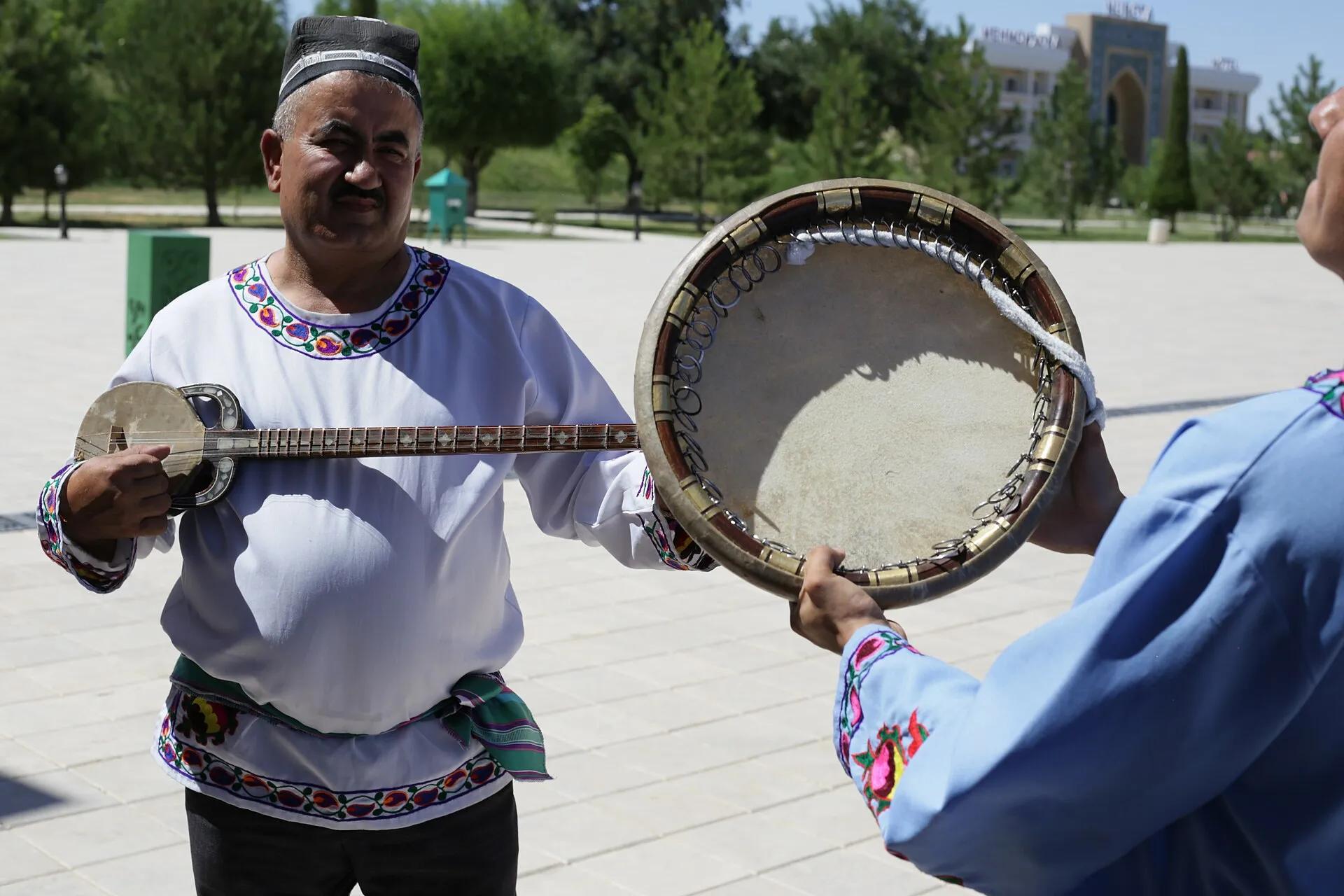
Before booking, find out whether an event is a concert, a demonstration with discussion or background entertainment during dinner. None is automatically wrong, but they serve different purposes. For a focused encounter, a smaller session with time for questions may suit you better than a busy restaurant. The cover photograph shows Uzbek performers with a frame drum and string instrument. It illustrates living performance, not a specifically identified Shashmaqom sequence or flute recital.
Travel Tip
Ask permission before recording and put the phone away for at least one complete piece. Afterwards, request the names of the instrument, performer and composition so that the memory does not remain simply “traditional music.”
- When: At a scheduled performance or an agreed meeting with musicians.
- Where: Uzbekistan and Tajikistan for Shashmaqom; Kazakhstan for sybyzgy traditions.
- The Vibe: Attentive listening to distinct voices, not a single regional soundtrack.
Ask Minzifa Travel about music encounters, explore cultural tour options, and meet the people planning them.
Cover photo: Uzbek musicians with a frame drum and string instrument.
Comments
Leave a comment
No comments yet. Be the first to share your thoughts!