Find the Repeat: A Traveller’s Guide to Islamic Geometric Tilework
A tiled wall can seem impossibly complicated until you find one small shape that repeats. Then the pattern begins to open up. You do not need advanced mathematics to enjoy this moment: a little patience can turn the decoration of a Central Asian monument into a satisfying visual puzzle.
1. Choose one patch, not the whole facade
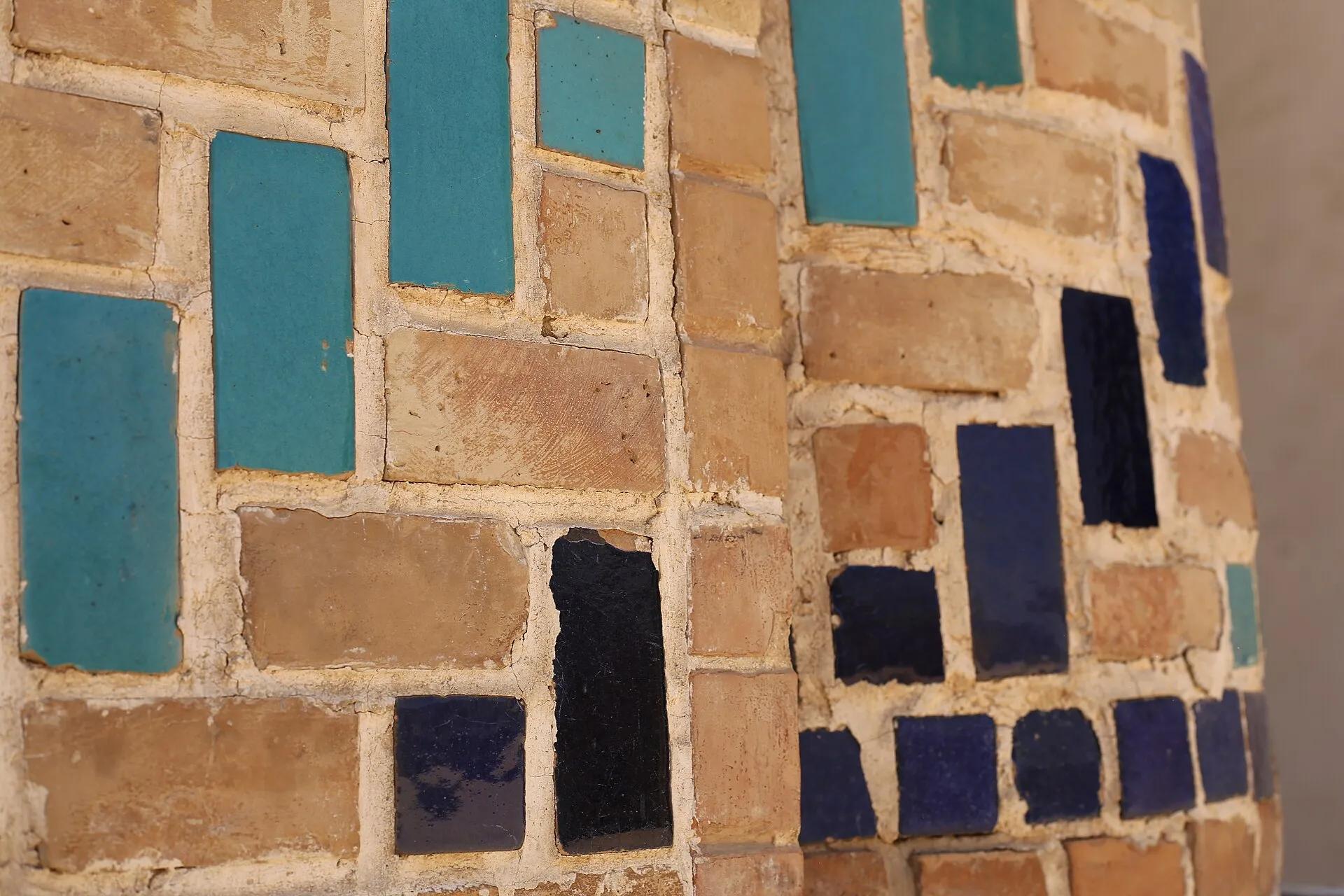
Start with a section you can see comfortably from a permitted path. Pick a star, cross or polygon and look for its nearest matching neighbor. Does it slide across the wall unchanged, turn around a center, or face a reflected version of itself? These are different design operations: translation, rotation and reflection. Not every pattern uses all three. Following just one line across several shapes is often more helpful than trying to count every point at once. The Metropolitan Museum's geometric-design lesson explains how circles, lines and polygons provide a practical foundation for this kind of ornament.
2. Try an eight-pointed star on paper
Draw a square, then a second square of the same size sharing its center but turned through 45 degrees. Together their outlines create a familiar eight-pointed form. This simple exercise makes it easier to recognize how an apparently elaborate design can grow from a limited set of decisions. It is an introduction, not a reconstruction of every historical workshop's method. The maker still had to translate a design into material: set dimensions, cut or form pieces, handle joints and fit the result to a real wall. At the border, look for the solution to a practical problem: how does a repeating field meet a doorway, corner or inscription? This is where craft becomes especially visible.
3. Leave room for meaning without inventing a code
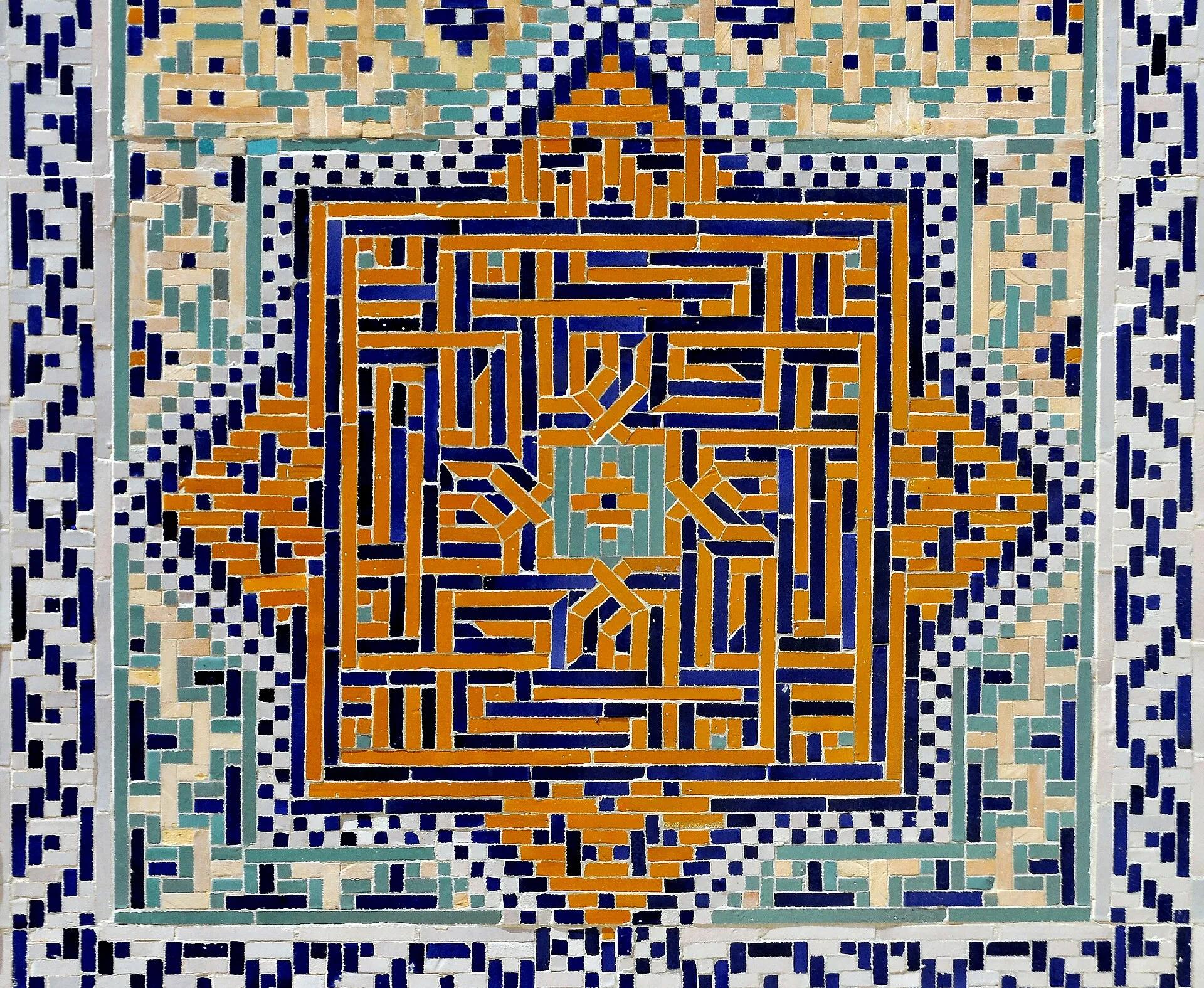
Geometric ornament can invite reflection on order, repetition and continuity. That does not establish one fixed religious meaning for every polygon across different cities and centuries. Nor should decorative lettering be reduced to geometry alone: an inscription may carry a text that needs translation. The cover detail from Bukhara's Ark combines colored elements and an organized layout. Use it as a prompt to look closely, not as proof of a universal hidden message.
Travel Tip
Make this a ten-minute family challenge: each person finds one repeat and explains it. Sketch from a public viewing spot; never trace directly on a historic surface.
- When: During a monument visit with a short pause for close observation.
- Where: Tiled buildings in Samarkand, Bukhara and beyond.
- The Vibe: A puzzle made of color, proportion and human decisions.
Build an architecture-focused route, talk to Minzifa Travel, and meet the team behind the itinerary.
Cover photo: Colored architectural ornament in the Ark of Bukhara.
Comments
Leave a comment
No comments yet. Be the first to share your thoughts!