Why Samarkand Looks Blue: Cobalt, Copper and the Glaze Beneath the Shine
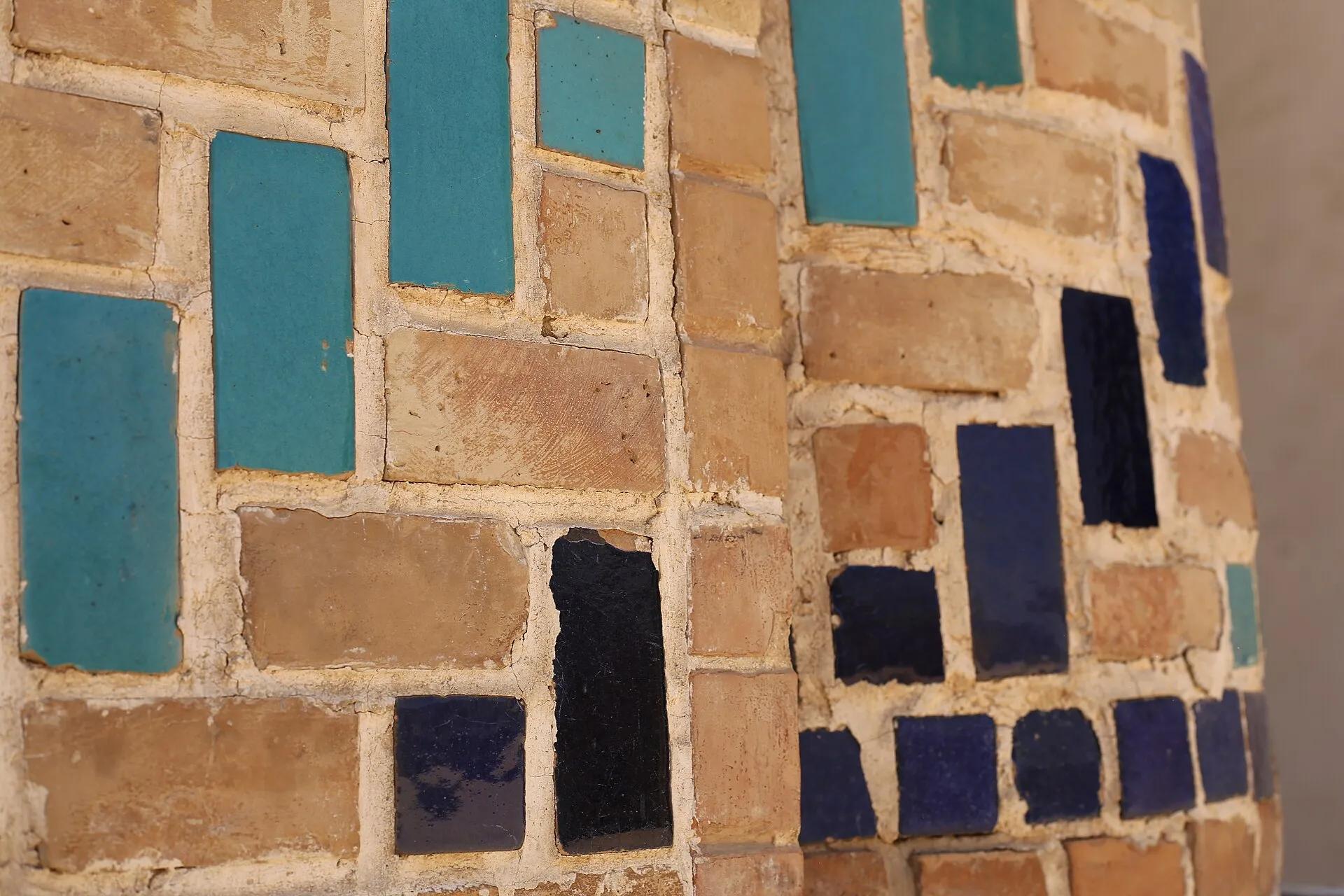
Stand close to a tiled wall in Samarkand and the famous blue skyline breaks into different colors: dark blue, turquoise, pale patches and reflections. The effect is not one miraculous substance applied everywhere. It is the outcome of materials, firing and skilled decisions, followed by centuries of weathering and repair.
1. Blue is a family, not a single recipe
Cobalt is associated with deep blue in many historic glazes; copper can produce blue-green or turquoise effects. But an ingredient's appearance depends on the surrounding glaze and firing conditions. Seeing turquoise does not reveal a complete chemical recipe. Glaze is a glassy coating fused onto a ceramic surface. Its composition matters as much as its colorant. An original study of Timurid, Ottoman, Safavid and Qajar ceramics, including material from Samarkand, uses compositional and Raman analysis to distinguish glazes and pigments. That laboratory work is a better guide than assuming all blue tiles share one formula.
2. Look for the joins between colors
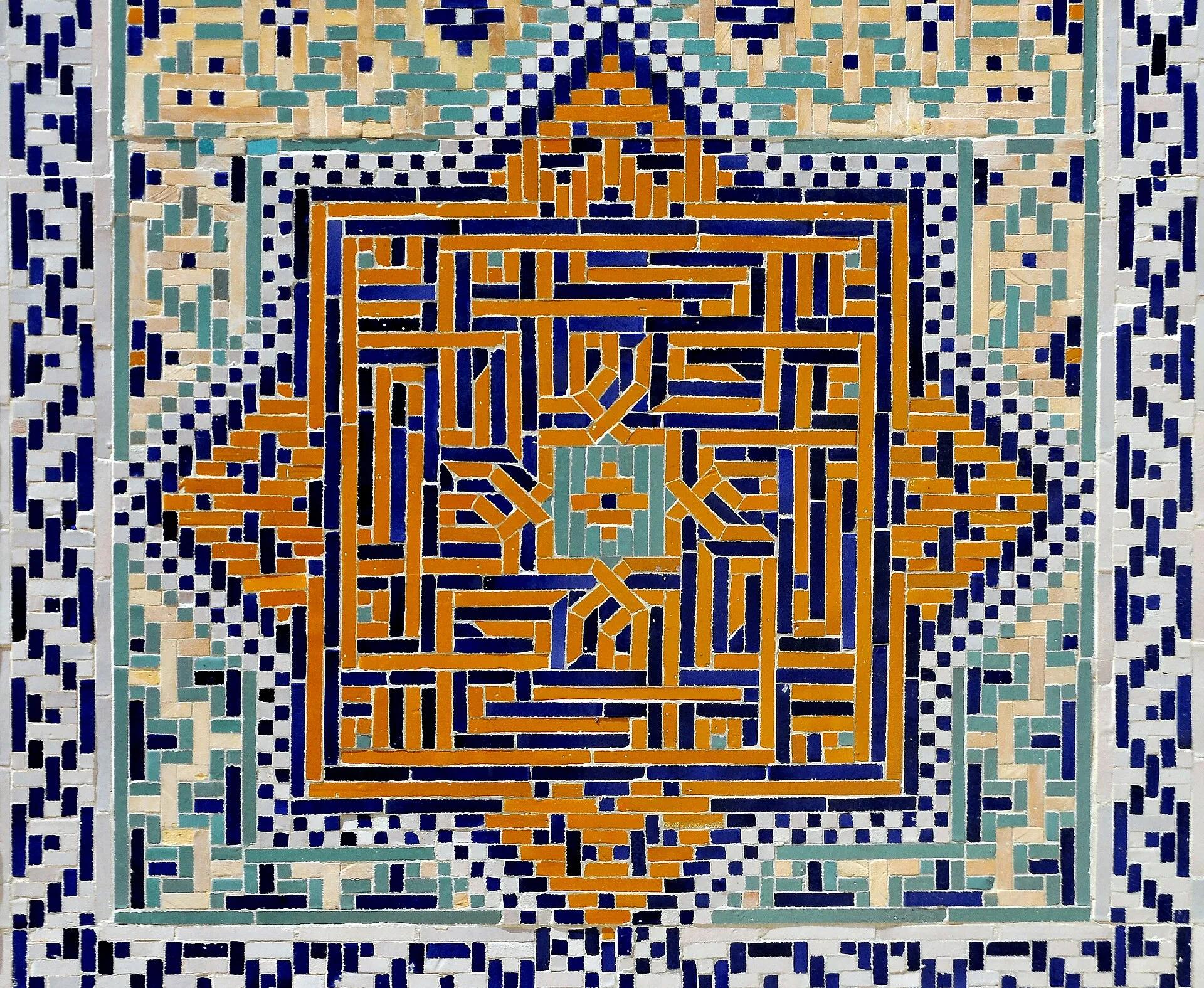
At Shah-i-Zinda, choose one panel rather than trying to absorb the entire ensemble at once. Notice where colors meet, how pieces fit together and whether a decorative line continues across a joint. Some effects come from assembling colored pieces; others come from decoration on a larger ceramic surface. The close-up above illustrates the contrast between turquoise and darker blue glazed elements. It does not establish their chemical composition. A photograph records appearance under particular light, not the results of a pigment test. Try looking once from a distance and once from an accessible viewing point nearby. The first view reveals the design; the second reveals the making.
3. A new-looking tile may have an old neighbor
Historic surfaces are rarely perfect time capsules. Restoration, replacement, dirt and exposure can all change what a visitor sees. Uniform brightness is not reliable proof of recent manufacture, and an uneven surface is not proof of antiquity. Ask a guide which repairs are documented. Avoid touching glazed surfaces or stepping over barriers for a closer photograph. The most rewarding detail may be a modest transition between panels rather than the largest dome.
Travel Tip
Photograph the whole wall before its details. Keeping those images together makes it easier to remember where each pattern belongs.
- When: In daylight, allowing time to compare changing reflections.
- Where: Shah-i-Zinda and other tiled monuments in Samarkand.
- The Vibe: A slow encounter with color, chemistry and craftsmanship.
Explore cultural journeys with Minzifa Travel, request time for tilework, and meet the planning team.
Cover photo: Blue and turquoise glazed detail at Shah-i-Zinda, Samarkand.
Comments
Leave a comment
No comments yet. Be the first to share your thoughts!