Milk for the Road: Kurut and the Ingenuity of the Nomad’s Pantry
A small ball of kurut can be surprisingly assertive: salty, sour and much firmer than the fresh dairy foods many visitors know. It is also a useful way into a bigger question. How did herding households turn seasonal milk into something easier to store and carry?
1. Drying changed what milk could do
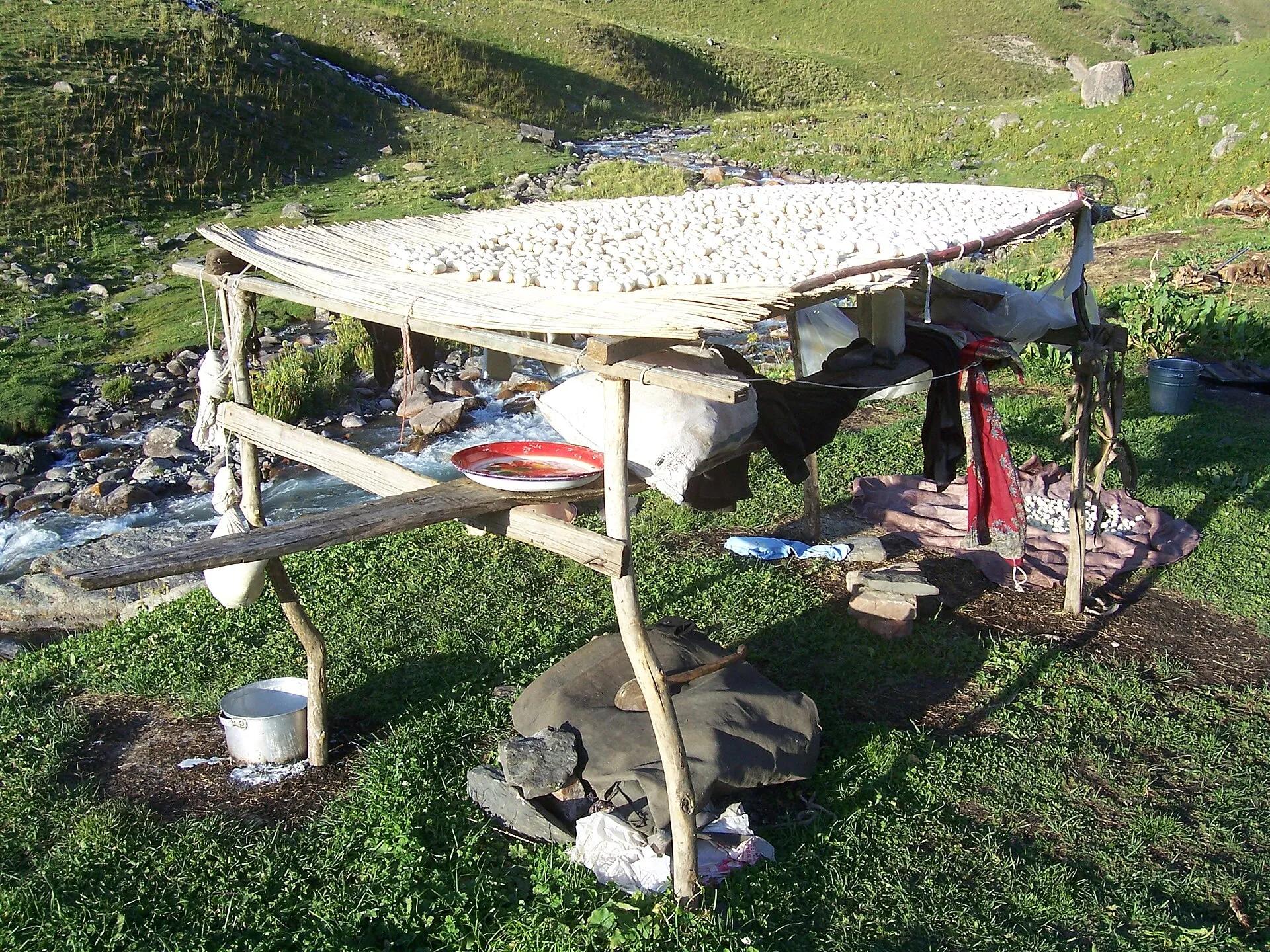
Kurut, also written qurt in some contexts, belongs to a family of dried dairy foods found across Central Asia and neighboring regions. Names, shapes and methods differ, so one market sample cannot represent every household's tradition. An FAO report on dairy development in Kazakhstan describes traditional processing, including dried products and qurt made from strained buttermilk. Removing moisture helped transform a perishable ingredient into a more portable food. The cover photograph shows kurut drying outdoors in Kyrgyzstan: a working process rather than a styled restaurant dish.
2. Fermentation and drying are different tools
Fermentation changes a food through microbial activity; drying reduces its moisture. They can be used in the making of the same product, but they are not interchangeable processes. Straining and salting may add further steps, depending on the preparation. Seasonal thinking matters too. Fresh milk, fermented drinks, butter and dried dairy are different responses to the same resource. Rather than imagining a single fixed nomadic menu, ask how a household's food changes with the season and the animals it keeps. These techniques are not a guarantee that any homemade dairy product is safe indefinitely. This is a cultural introduction, not a preservation recipe.
3. The pantry connected herders and towns
Pastoral food traditions should not be pictured in isolation from farming and markets. Mobile and settled communities exchanged goods, and contemporary families combine inherited methods with bought ingredients and modern storage. When tasting, ask whether the product is eaten as a snack, softened or used in another dish. A local answer can change the way you understand a mouthful. Start with a small amount: the saltiness and texture are part of the experience, not evidence that you must eat a large serving to be polite.
Travel Tip
Tell hosts about dairy allergies or dietary restrictions before a food visit. Choose hygienically handled products and ask how they should be stored; a dry exterior alone does not establish safety.
- When: During a market visit or a pre-arranged household food demonstration.
- Where: Across Central Asia, with distinct regional names and practices.
- The Vibe: Resourcefulness you can taste, explained by the people making it.
Explore food-focused travel possibilities, ask us about a tasting, and learn about Minzifa Travel.
Cover photo: Kurut drying outdoors in Kyrgyzstan.
Comments
Leave a comment
No comments yet. Be the first to share your thoughts!