The Mystical Sufi Trails of Central Asia: Understanding Shrines and Ziyarat
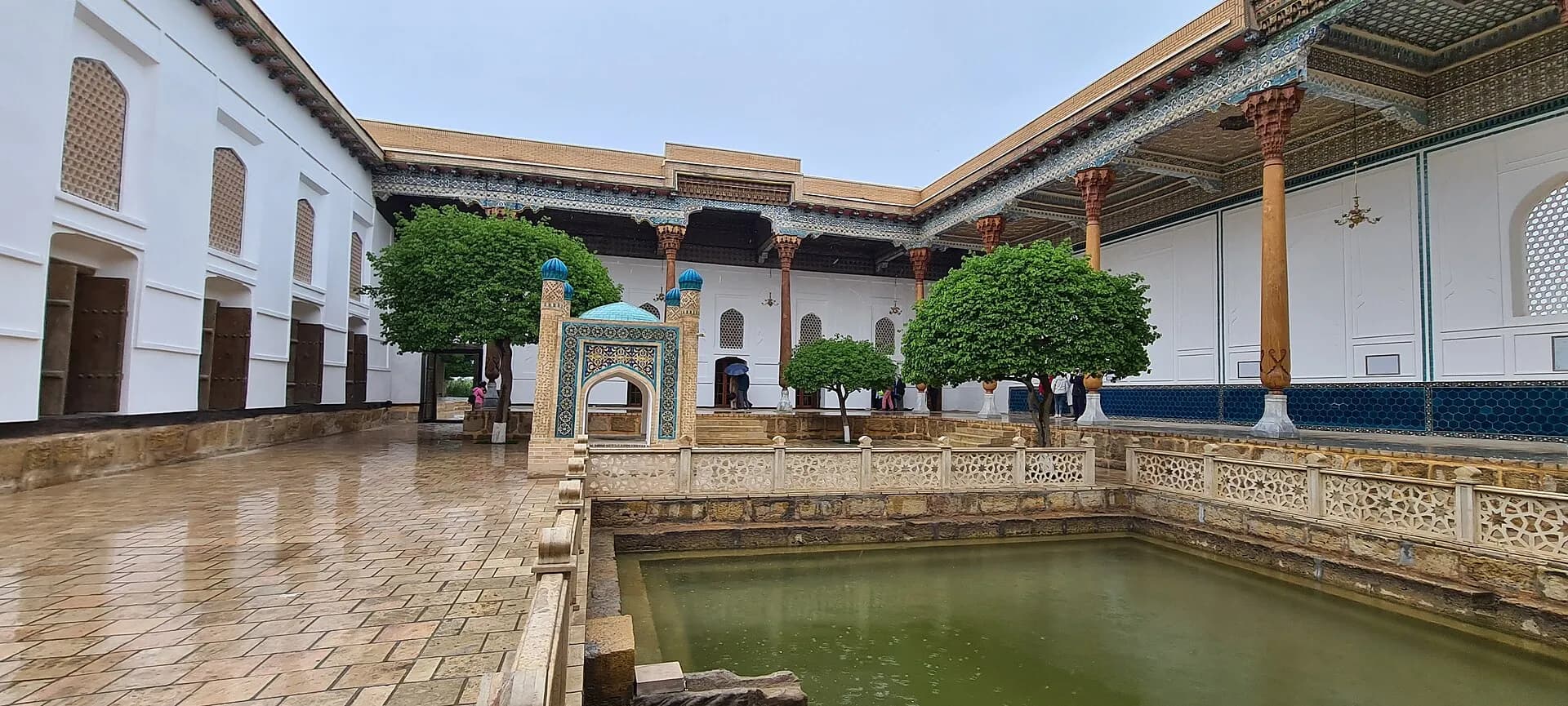
At a shrine, a visitor may come for carved wood or a monumental dome while the person beside them comes to remember a spiritual teacher. Both are sharing the same space. Understanding that difference is a good starting point for Central Asia's Sufi heritage: its architecture belongs to a history of belief, teaching and patronage that remains meaningful today.
1. Ziyarat is a visit with intention
Ziyarat refers broadly to visiting revered places or figures' burial sites. People may come to pray, reflect, commemorate or maintain a family tradition. Practices and religious interpretations vary; no single description covers every community. A respectful traveler does not need to copy an unfamiliar ritual. Give worshippers space, follow the caretaker's directions and ask before photographing devotional activity. Architectural curiosity is welcome when it does not interrupt the reason others are there.
2. Bukhara: a shrine assembled over time
The Bahouddin Naqshband memorial complex near Bukhara is associated with a major figure in the Naqshbandi tradition. Its tomb, prayer spaces, courtyards and other structures were not built all at once. UNESCO's published description of the complex documents that layered arrangement. Looking at how spaces lead into one another can be more revealing than searching for hidden symbolism in every decorative feature. Some structures serve circulation and gathering as well as display.
3. Turkestan: devotion on an imperial scale
In Kazakhstan, the mausoleum of Khoja Ahmed Yasawi presents a different architectural setting. Timur commissioned the surviving building centuries after the Sufi teacher's lifetime. UNESCO dates its construction to 1389–1405. Here, scale and patronage belong to the story alongside devotion. The two destinations make an interesting comparison, but they are far apart. Treat them as separate itinerary stages, not neighboring stops on a casual afternoon trail.
Travel Tip
Bring clothing that can cover shoulders and legs, and ask whether a particular space requires shoes to be removed or a head covering. Local instructions are more useful than assumptions.
- When: Around public access hours and without intruding on worship.
- Where: The Bukhara region of Uzbekistan and Turkestan in Kazakhstan.
- The Vibe: Attentive and unhurried, with room for both history and living belief.
Discuss a suitable heritage route with Minzifa Travel. Browse Central Asian journeys and learn about the people planning them. Cover photo: A courtyard in the Bahouddin Naqshband memorial complex near Bukhara. Photo: BeshevI / Wikimedia Commons, CC BY-SA 4.0. Resized for web display.
Comments
Leave a comment
No comments yet. Be the first to share your thoughts!