Ancient Coinage of the Silk Road: Reading Sogdian and Kushan Money
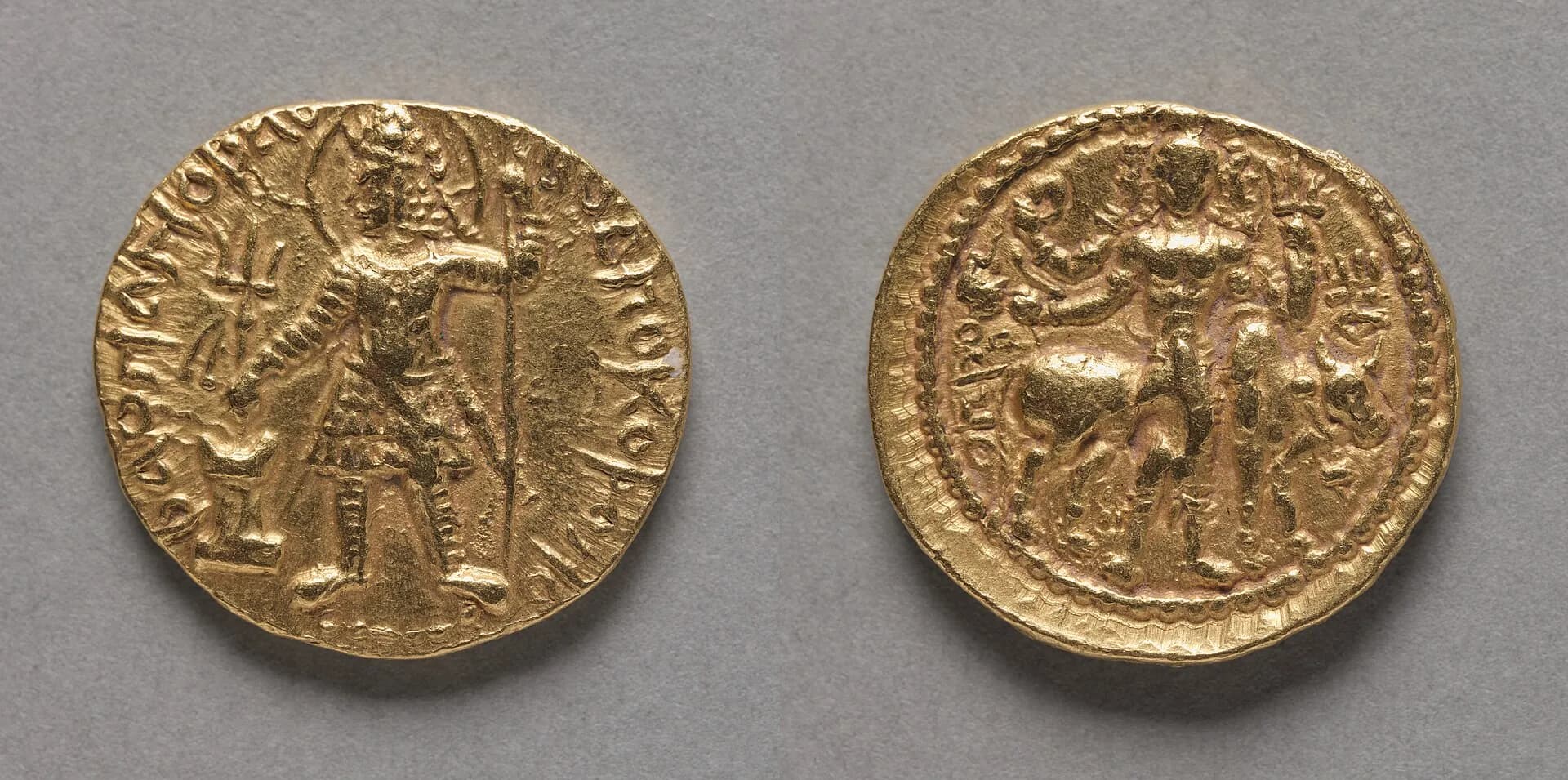
A coin puts a ruler's public image into a small, portable space. The photograph above shows both sides of a Kushan gold coin: a standing ruler on one face, a deity and bull on the other. It offers an introduction to an ancient political world, but neither side tells us exactly who spent this particular piece.
1. Start with both faces
A portrait, symbol or inscription can help identify an issuing authority. Metal, weight and dimensions add information, while wear or alterations may show that an object had more than one use. The Cleveland Museum of Art record identifies the illustrated coin with Vasudeva I. Its imagery belongs to Kushan rule in a region connecting Central and South Asia. Use the collection label to anchor the identification rather than guessing from the color of the metal.
2. Sogdian money was not one universal currency
Sogdiana included regional centers and changing political authorities. Its coinage should not be imagined as a single standardized payment system accepted everywhere along the Silk Roads. The British Museum's Sogdian collection description places local coin production within the region's wider history of exchange. A coin's mint or issuing community helps locate authority; it does not automatically map every journey the coin made. Kushan and Sogdian examples also belong to different contexts and periods. Placing them together is useful for comparison, not for pretending all Silk Road trade happened at one time.
3. What a find can and cannot prove
An excavated coin can help date a deposit when its context is recorded carefully. A group of coins may suggest circulation, saving or patterns of exchange. A single distant find, however, might reflect trade, payment, a gift or later movement. This is why museum labels and excavation records matter. The Metropolitan Museum's overview of early Asian trade describes connected land and sea networks. Money was one part of those networks, alongside goods, credit and relationships.
Travel Tip
For collecting, seek documented provenance and professional advice on export and import requirements. Avoid unrecorded excavated objects. A good reproduction can illustrate a story without separating an archaeological find from its context.
- When: During a museum visit with time for the labels.
- Where: Central Asian history collections and museums holding Kushan material abroad.
- The Vibe: Small objects opening much larger historical questions.
Contact Minzifa Travel about adding museum time to a Silk Road journey. Read about the team planning the route.
Comments
Leave a comment
No comments yet. Be the first to share your thoughts!