The Secret Language of Uzbek Spices: Zira, Saffron and the Market Pantry
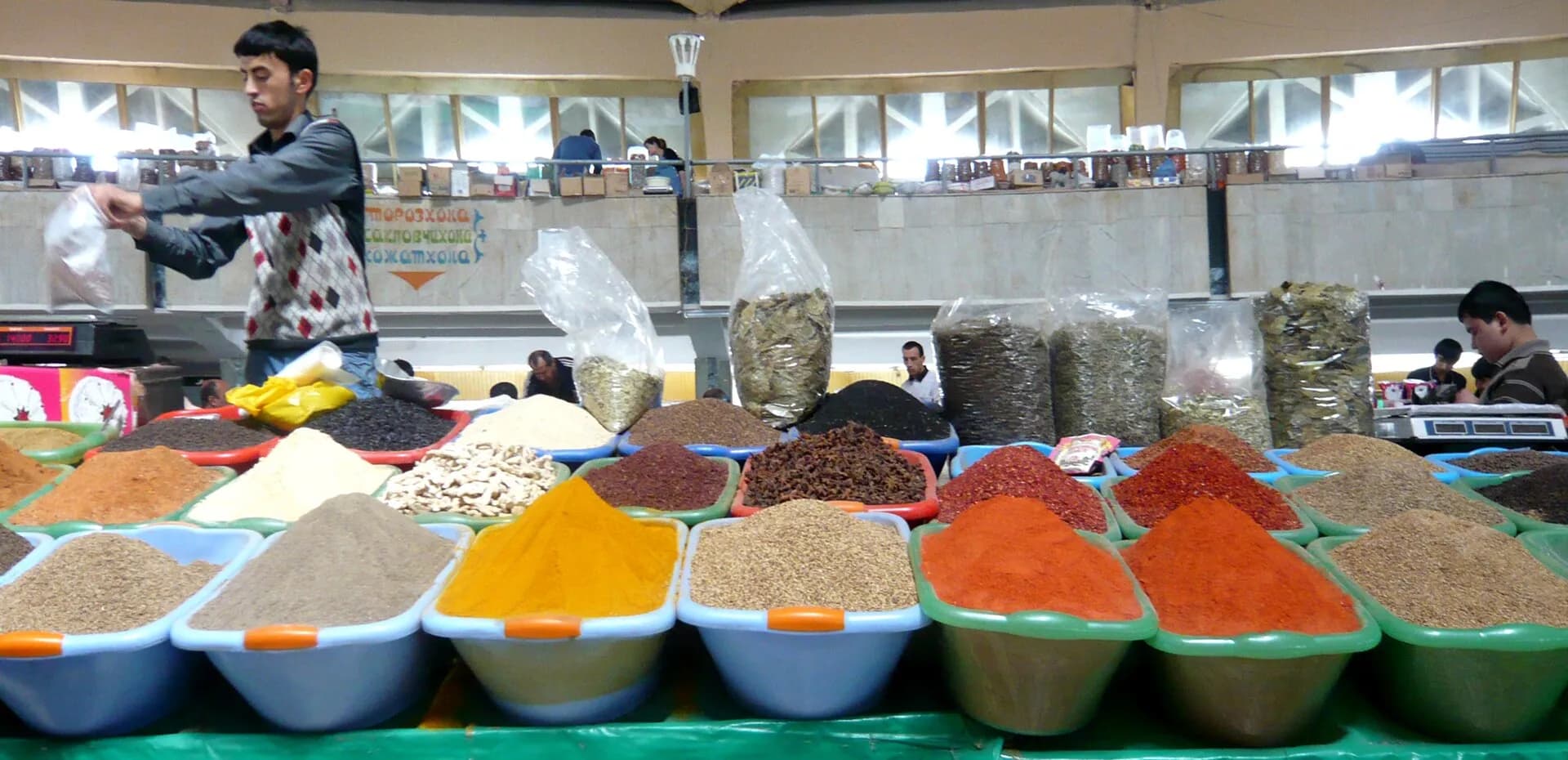
A spice stall in Uzbekistan can look like a painter's bench: red powders, pale seeds, yellow heaps and little packets of dried berries. The photograph above was taken at Tashkent's Chorsu Market. It is a useful place to start exploring flavor, although color alone tells you surprisingly little. What matters is what a cook buys, how much goes into the pot, and when it is added.
1. Zira: learn the aroma before the recipe
Zira is commonly translated as cumin, and its earthy fragrance is familiar in Uzbek cooking. Market names and seed varieties can vary, so it is worth asking the seller which kind local cooks use for plov. With permission, smell a small sample of whole seeds. Compare that aroma with a ready-ground blend. A dish can have a pronounced spice fragrance without being hot with chili; ordering Uzbek food is easier once you separate those two ideas.
2. Saffron deserves a specific question
Saffron is sold and used in the region, but it does not belong in every Uzbek dish or every version of plov. Uzbekistan Travel's account of Chorsu lists a much broader pantry, including coriander, pepper, cloves and turmeric. When a seller points to a bright yellow powder, ask for its name rather than assuming it is saffron. Genuine saffron is made from the dried stigmas of a crocus flower. Turmeric and prepared blends are different products. The distinction matters for both price and cooking.
3. Let a meal explain the market
Try choosing one ingredient from a dish you enjoyed. Ask the cook what provided its aroma, then look for that ingredient at a stall. This gives a small purchase a purpose: the chance to recreate part of a meal at home. The Silk Roads brought ingredients and knowledge into contact, but today's market is also a modern supply chain. An attractive packet does not establish where a spice was grown or how long it has been used locally. Ask about origin, freshness and ingredients, particularly with mixtures.
Travel Tip
Buy a modest quantity in sealed, labeled packaging and check your destination's food import rules before carrying it home.
- When: During a market visit followed by lunch.
- Where: Chorsu in Tashkent or a local bazaar along your route.
- The Vibe: A conversation about everyday cooking, one aroma at a time.
Make food part of your itinerary with Minzifa Travel tours. Contact the team about a market visit or cooking experience, and learn about Minzifa Travel. Cover photo: Spice stall at Chorsu Market, Tashkent. Photo: LBM1948 / Wikimedia Commons, CC BY-SA 4.0. Resized for web display.
Comments
Leave a comment
No comments yet. Be the first to share your thoughts!