The Circle in the Desert: Reading Koy-Krylgan Kala and Ancient Khorezm
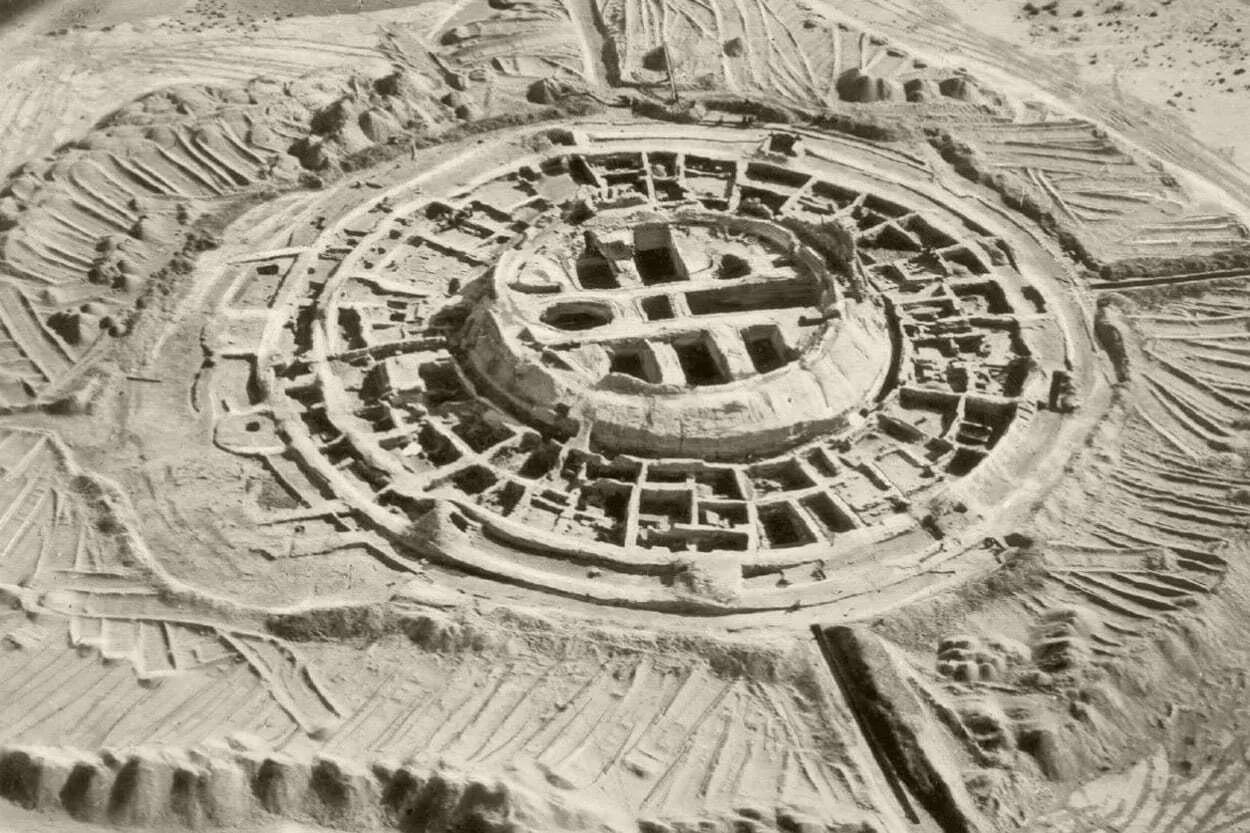
From an excavation photograph, Koy-Krylgan Kala looks strikingly deliberate: a central circular structure surrounded by an outer ring. It is an arresting shape, but it should not become a template for every ruin in Khorezm. The region's ancient settlements had different plans, purposes and histories.
1. Not every desert fortress was a ring
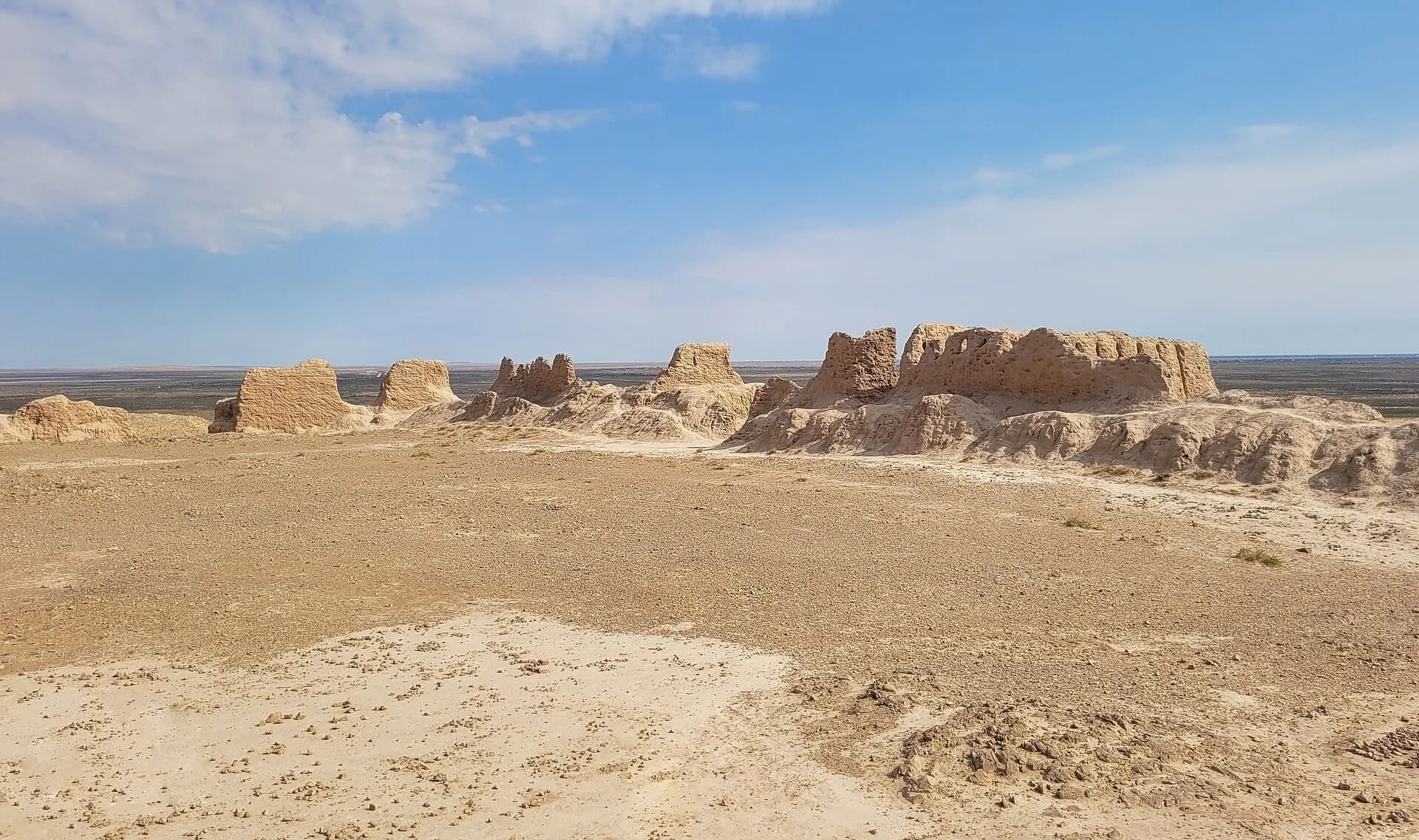
The familiar phrase “desert castles” brings together places that were not necessarily castles in the same sense. Fortifications, residences, religious buildings and settlements can all enter a visitor's itinerary under that convenient label. Koy-Krylgan Kala stands out because of its circular organization. Uzbekistan's heritage submission on ancient towns and fortresses of the Aral Sea region describes the site within this wider archaeological landscape. Compare its plan with other Khorezm sites rather than expecting a collection of matching rings. The cover is an archival excavation view. It helps explain the arrangement, but is not a promise that today's ground-level visit will present the same exposed walls.
2. A shape does not settle a building's purpose
Circular architecture invites dramatic explanations. At Koy-Krylgan Kala, religious functions and astronomical interpretations have featured in discussions of the site. These should be presented as interpretations grounded to varying degrees in archaeological evidence, not as an invitation to invent a precise ritual. Ask what supports an explanation: the plan, objects recovered in excavation, construction phases or a comparison with another site. Also ask what remains uncertain. A good archaeological account can be compelling without pretending every room has a known use.
3. Imagine water before imagining emptiness
Ruins standing in an arid landscape can make ancient life seem inexplicable. Yet the history of Khorezm belongs to an oasis environment shaped by water and irrigation, not simply to a timeless expanse of sand. The published Desert Castles of Ancient Khorezm description places the monuments in that regional context. A map showing settlements and waterways can therefore add more to a visit than another dramatic legend. It encourages you to ask how people farmed, moved supplies and maintained communities around the buildings.
Travel Tip
Ask a local operator to confirm access and current conditions before adding a remote ruin. Carry water and sun protection, follow established routes and never climb fragile earthen walls or collect objects.
- When: In suitable weather, with transport and access checked beforehand.
- Where: Ancient Khorezm, including Karakalpakstan in Uzbekistan.
- The Vibe: Reading a changing landscape through an unusual archaeological plan.
Discuss a Khorezm itinerary, browse Minzifa Travel routes, and learn about the team.
Cover photo: Archival excavation view of Koy-Krylgan Kala; not a current-condition photograph.
Comments
Leave a comment
No comments yet. Be the first to share your thoughts!