Buddhist Termez: Reading Fayaztepa, Qoratepa and the Zurmala Stupa
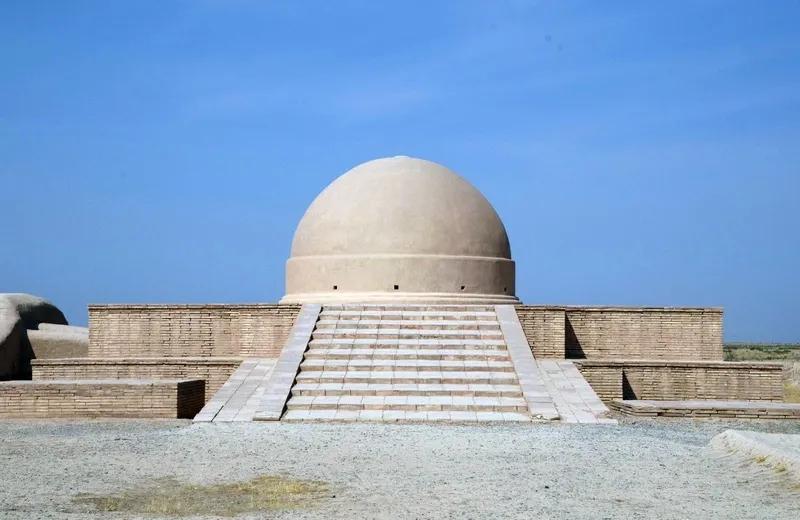
Near Termez, the outline of a stupa and the foundations of a monastery open a chapter of Uzbekistan's history that looks very different from the tiled monuments farther north. Here, Buddhism belongs to the story of ancient northern Bactria and the cultural connections across the Amu Darya region.
Three names help organise a first visit: Fayaztepa, Qoratepa and Zurmala. Each offers a different kind of evidence, and each deserves more than a quick photograph labelled “ancient ruins”.
1. Put the Buddhist monuments in the right period
Ancient Termez has remains from several eras. Its Buddhist monasteries are especially associated with the Kushan period in the first centuries CE. UNESCO's Ancient Termiz submission explicitly connects Fayaztepa and Qoratepa with that setting.
The wider region also has a Greco-Bactrian past, but that is not a suitable blanket date for these Buddhist complexes. Even within one monastery, foundations, additions and later alterations can belong to different phases. Ask for the chronology of the actual structure in front of you.
2. At Fayaztepa, look for the working monastery
Fayaztepa is a good place to think about how worship and daily routines occupied neighbouring spaces. A temple plan is easier to understand when a guide distinguishes the stupa, devotional areas and rooms associated with monastic life.
Its conservation history matters too. The Japanese mission to UNESCO documents a project to preserve the remains. What a visitor sees includes archaeological fabric and modern protection; the two should not be presented as an entirely intact ancient building.
Stand where the plan can be explained without stepping onto vulnerable walls. Ask where important objects were found and where they are now kept. Museum displays and excavation locations often tell different parts of the same story.
3. Treat Qoratepa as a separate visit
Qoratepa, also written Kara Tepe, combines Buddhist remains with excavated cave spaces. It is not another spelling of Fayaztepa, and its different layout is one reason to discuss both sites rather than merge them into a single stop.
Its location makes access a question to settle before setting out. Have a local organiser check current permission requirements and whether a visit is possible for your party. Do not approach restricted ground or assume a guidebook description is an access permit.
4. Let Zurmala change the scale
The surviving Zurmala stupa is a substantial brick remnant. Unlike a decorated museum object, its mass invites you to consider monument building, the surrounding setting and what has disappeared.
Distinguish the surviving core from a reconstruction of its original appearance. A stupa is a Buddhist monument; interpreting it as an ordinary watchtower or a complete surviving temple would obscure its purpose. Keep to the permitted approach and leave the brickwork untouched.
5. Add objects to the landscape
An archaeological museum visit can make small fragments legible after the larger sites. Ask which displayed sculptures, architectural pieces or inscriptions are specifically associated with the Termez Buddhist complexes. A label's findspot and date are more useful than an attractive but vague “Silk Road” caption.
Travel Tip
Plan around confirmed access first, then heat and travel time. Carry identification if your organiser advises it, sun protection and water. Ask Minzifa Travel for a Termez day that includes a museum and a clear alternative if Qoratepa is unavailable.
Sources and further reading
- UNESCO: Ancient Termiz, tentative-list submission
- UNESCO: Silk Roads sites in Uzbekistan
- Permanent Delegation of Japan to UNESCO: Fayaz-Tepa conservation project
Cover photo: Fayaztepa stupa enclosure with a modern protective dome. Source: Fayaz Tepe, Stupa.jpg. Credit: Jona Lendering. License/status: CC0.
Comments
Leave a comment
No comments yet. Be the first to share your thoughts!