Silk Road Medicine in Manuscripts: Herbs, Spices and the Making of Knowledge
A medicinal ingredient can travel in more than one way: as a traded substance, a name translated into another language, or an entry copied into a book. Those journeys do not necessarily follow the same route.
For a history-minded traveller, medical manuscripts offer a way to explore Central Asia’s intellectual connections through classification, translation and material objects. This is a history of knowledge, not a guide to treating illness.
1. Distinguish a substance from a compound
Medieval medical writers discussed individual medicinal substances, often called simples, as well as compounded preparations. Their books could organise ingredients alphabetically, arrange preparations by ailment or discuss food and drink in a separate section.
The National Library of Medicine’s catalogue of Najib al-Din al-Samarqandi’s writings makes those distinctions visible. It identifies texts on food and drink, nourishment for the ill, simple remedies and a formulary of compound preparations. The collection shows a structured medical literature rather than one undifferentiated set of “Silk Road elixirs”.
Those categories are historical. Their presence in a learned book does not establish modern safety or effectiveness.
2. Read a plant name as evidence, not an instruction
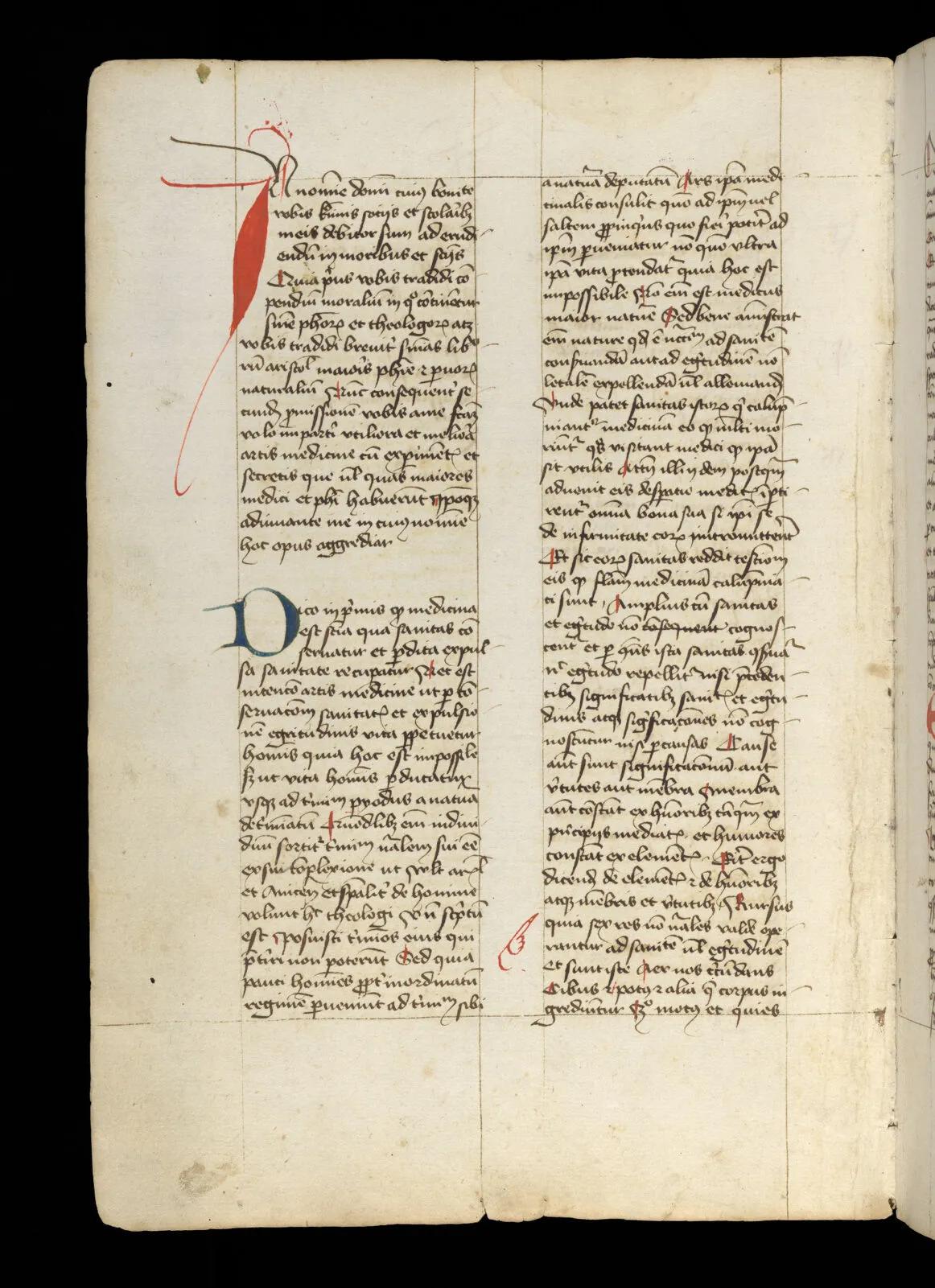
Wellcome Collection’s MS.105 includes an alphabetically arranged discussion of simples beginning with aloe and ending with ginger, alongside other medical and pharmacological texts. Ginger is familiar as a spice, but its appearance in a medical compilation tells us first about the text’s contents and organisation.
Names can shift between languages and periods. A historical entry may not map neatly onto a product sold under the same English name today. Identifying a substance, its preparation and its manuscript context requires more than recognising a word.
No historical recipe or dose is needed to appreciate the evidence: headings, sequence, script and the relationship between copied works are already revealing.
3. Date the manuscript separately from the author
MS.105 is a Latin compilation dated around 1430–1434. It contains material associated with Ibn Sina’s Canon, but it is not a manuscript written by Ibn Sina himself or proof that its paper travelled from Bukhara.
The Library of Congress offers another useful comparison: an Arabic copy of the Canon dated to 1853–1854. The work’s intellectual origins and the surviving copy’s production date are different pieces of information.
Our cover reproduces the Wellcome manuscript image labelled folio 5v. It illustrates later transmission of medical learning, not an untouched medieval pharmacy in Central Asia.
4. Follow the evidence into a museum
For a displayed manuscript, ask about language, date, authorial attribution and copying history. For a pharmacy vessel, ask what identifies its purpose and whether any contents have actually been documented. A narrow neck or an attractive label alone cannot establish a particular “healing elixir”.
The broader lesson is about connections without invented routes. Texts and ingredients circulated, but each claimed journey needs evidence of its own. For a different material example, explore historical perfume sprinklers and aromatics.
Travel Tip
Request a museum or history-of-science visit and ask which objects are actually on display. Use market spices as a conversation about trade and food, without treating them as medical recommendations. Contact Minzifa Travel to connect appropriate collections with your itinerary.
Sources and further reading
- National Library of Medicine: al-Samarqandi’s pharmaceutical writings
- Wellcome Collection: medical and pharmacological compilation MS.105
- Library of Congress: the Canon of Medicine, 1853–1854 manuscript copy
Cover image: Wellcome Collection MS.105, image labelled folio 5v, a Latin medical compilation dated c.1430–1434; later transmission of medical learning, not Ibn Sina’s autograph. Source: MS.105, folio 5v. Credit: Wellcome Collection. License/status: Public Domain Mark. Resized for web delivery; no substantive alteration.
Comments
Leave a comment
No comments yet. Be the first to share your thoughts!