Fire and Faith Before Islam: Reading Central Asia’s Temple Evidence
A patch of ash tells us that something burned. To identify a sacred fire, a ritual space or a Zoroastrian temple, archaeologists need more: the arrangement of rooms, repeated deposits, objects, images and comparisons with other evidence.
That makes Central Asia’s pre-Islamic religious heritage a particularly rewarding subject for travellers. Two places—Akchakhan-kala in ancient Khorezm and Panjikent in Sogdiana—show why one label cannot explain every sanctuary.
1. Start with the meaning of a fire altar
Encyclopaedia Iranica notes that “fire altar” is a modern scholarly term for a structure holding sacred fire. It cautions against applying a specifically Zoroastrian label where the religious context is uncertain.
That caution is practical. A hearth, a platform with burning traces and a purpose-built ritual installation raise different questions. Ask which evidence identifies the feature and whether the proposed interpretation is widely accepted or still debated.
2. Look at the combination of evidence at Akchakhan-kala
Excavations at Akchakhan-kala have revealed monumental paintings and architectural settings associated by specialists with early Zoroastrian or Mazdean beliefs. Research by Alison Betts and colleagues examines fire features in their archaeological context rather than treating a single scorched surface as decisive.
The paintings add another line of enquiry. Scholars have identified imagery connected with the Avestan religious world, while particular divine identifications can remain tentative. The result is evidence for a distinctive ancient Chorasmian setting, not a complete picture of every community’s worship across Central Asia.
Separate the excavated location from the present location of conserved objects. A visit to the landscape may need museum material or a reconstruction drawing to make the interpretation understandable.
3. Keep Panjikent’s two temples distinct
At ancient Panjikent, in today’s Tajikistan, the excavators’ names Temple I and Temple II refer to different complexes. Studies associate Temple I more closely with Zoroastrian ritual, including a fire sanctuary during part of its history. Temple II is strongly linked with Nana and a wider, locally distinctive divine world.
These were changing institutions with several building phases. Their images, rituals and civic roles resist a simple division into identical “fire temples”. Compare a published site plan with the remains and ask which room and period the guide is discussing.
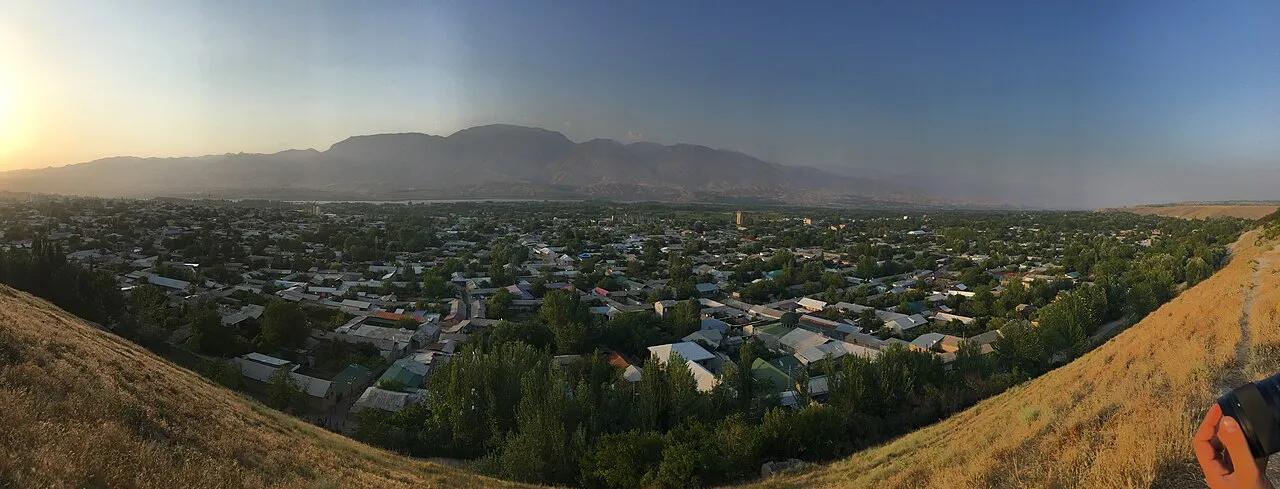
The cover is a landscape view from ancient Panjakent towards the modern town. It does not show an identified fire altar.
4. Connect ancient evidence with a living religion
Zoroastrianism continues to be practised today. Studying its ancient Central Asian traces should not turn it into a religion said to have vanished, or assume that present-day practice reproduces every ancient local form.
Likewise, a modern reconstruction is an explanation, not surviving ancient fabric. Keeping that distinction visible makes a site visit richer: you can appreciate both the discovery and the reasoning behind it.
Travel Tip
For a Panjikent or Khorezm visit, request an archaeological guide, a site plan and current access information. Combine exposed ruins with relevant museum displays, and carry water and sun protection. Contact Minzifa Travel to assess a route, including border arrangements if Tajikistan is involved.
Sources and further reading
- Encyclopaedia Iranica: Fire Altars
- Betts and colleagues: Fire Features at Akchakhan-kala and Tash-k’irman-tepe
- Encyclopaedia Iranica: Panjikant
- Grenet and Azarnouche: Where Are the Sogdian Magi?
Cover image: View from the ancient Panjakent site towards the modern town, Tajikistan; no identified fire altar is shown. Source: Panjakent 7-4-19.jpg. Credit: Harry Breault. License/status: CC BY-SA 4.0. Resized for web delivery; the adapted photograph remains under the stated share-alike licence.
Comments
Leave a comment
No comments yet. Be the first to share your thoughts!