Chitgari: Bukhara and Margilan’s Living Art of Woodblock Printing
A small wooden block can carry a surprisingly large design. Placed, lifted and repeated across cloth, it turns a carved motif into a border, a field of flowers or the rhythm of a tablecloth.
Uzbek textile printing, often called chitgari, is a living craft. Its story includes older collections and changing markets, but also contemporary workshops in places such as Bukhara and Margilan.
1. Follow the pattern onto the cloth
In block printing, a carved wooden stamp helps apply a design to prepared fabric. Historic processes could involve mordants and several dyeing stages; they should not all be reduced to stamping ready-made paint onto untreated cloth.
The World Crafts Council’s regional encyclopaedia describes wooden blocks known as kalyb and records several Uzbek printing centres. Cotton has an important place in this history, although a contemporary maker may work with other fabrics and adapt the process.
Ask to see the block beside a finished repeat. That comparison makes the planning visible: how the edges meet, how separate colours align and how a small shape builds a much larger composition.
2. Keep printing separate from ikat
Ikat patterns arise from dyeing selected portions of yarn before weaving. Chitgari applies a pattern to cloth that has already been woven. Both can appear in the same object without being the same technique.
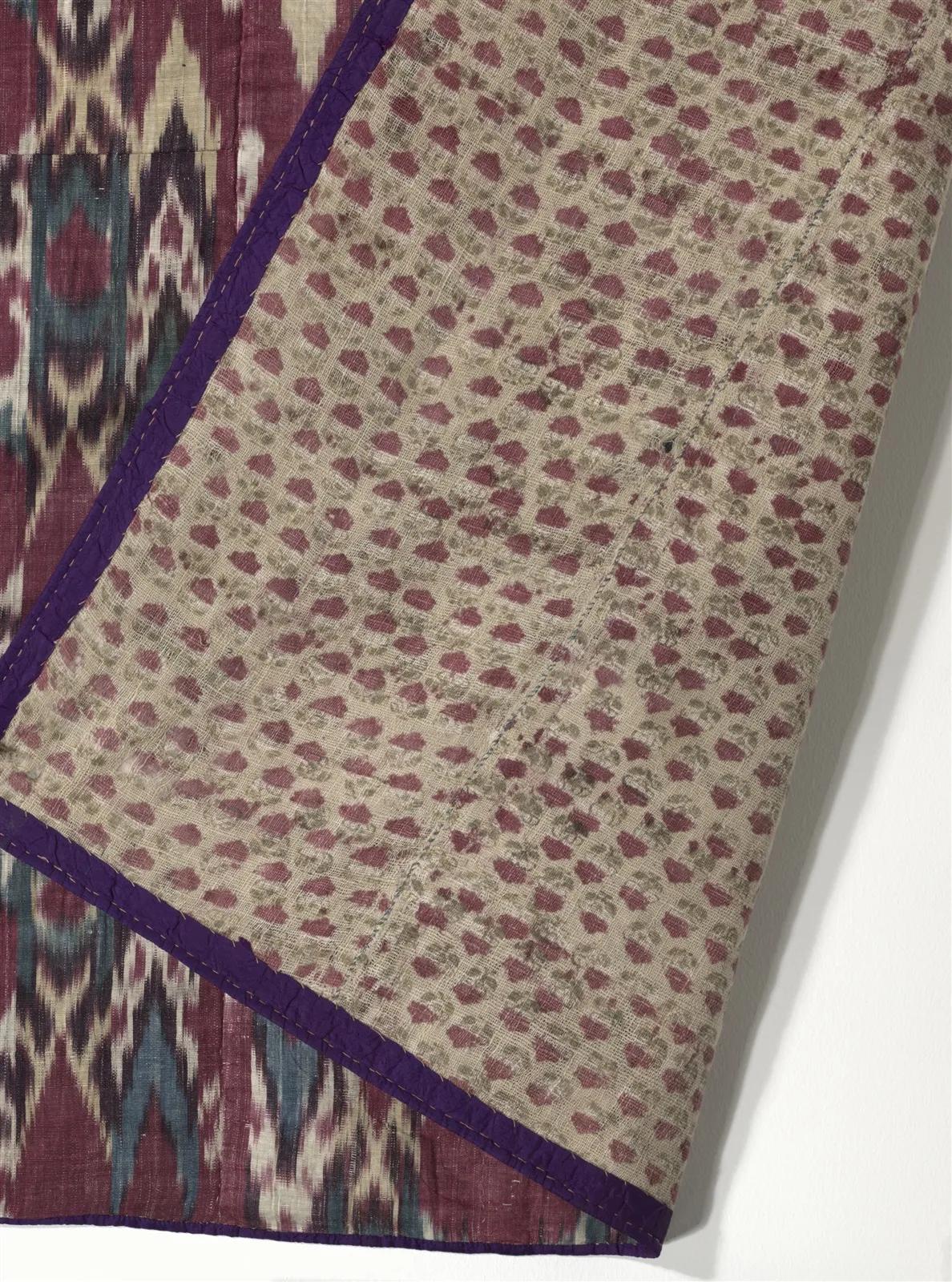
The Cleveland Museum of Art’s Bukhara wall hanging, accession 2006.151, is an excellent example. Its face is warp ikat; its original lining is block-printed cotton. The cover photograph shows the printed lining in the centre, with part of the folded ikat face visible at the edges.
A striped or blurred outline alone cannot identify the technique. Look at construction, read the object label and ask the maker how colour entered the material.
3. Meet a tradition that is still being taught
UNESCO’s account of the Crafts Development Center in Margilan explicitly includes block-printing workshops alongside weaving, embroidery and other crafts. The centre’s work offers a better starting point than a story declaring the entire tradition lost.
The encyclopaedia likewise identifies contemporary printing in Tashkent, Bukhara and Margilan. A visit should still be arranged: a working craftsperson may be preparing cloth or filling an order rather than giving a demonstration whenever visitors arrive.
4. Ask the maker about the motif
Floral forms, pomegranates and almond-like shapes occur in descriptions of Uzbek printed cloth. Their names and associations can be interesting, but a motif’s appearance does not establish one sacred meaning shared by every maker.
Ask who designed the block, where the pattern was learned and whether the piece adapts an older example. These questions invite a particular person’s story instead of forcing every textile into an anonymous “ancient symbol” explanation.
Travel Tip
Book a workshop that names block printing, since a general textile visit may focus on ikat. Confirm whether you will observe or print, and ask how the finished fabric should be washed. Ask Minzifa Travel to include an artisan appointment in a craft-focused tour.
Sources and further reading
- World Crafts Council–Asia Pacific: Block print
- UNESCO: Crafts Development Center in Margilan
- Cleveland Museum of Art: Bukhara wall hanging and printed lining, 2006.151
- Cultural Legacy of Uzbekistan: wooden textile-printing blocks
Cover image: Block-printed cotton lining of a Bukhara wall hanging (pardah), 1800–1850, Cleveland Museum of Art, 2006.151, Gift of Guido Goldman. Part of the folded warp-ikat face is visible at the edges. Source: Block-printed cotton lining of Wall hanging (pardah), 2006.151. Credit: The Cleveland Museum of Art, Gift of Guido Goldman. License/status: CC0. Resized for web delivery; no substantive alteration.
Comments
Leave a comment
No comments yet. Be the first to share your thoughts!