Sardobas of the Bukhara Road: How Covered Cisterns Stored Desert Water
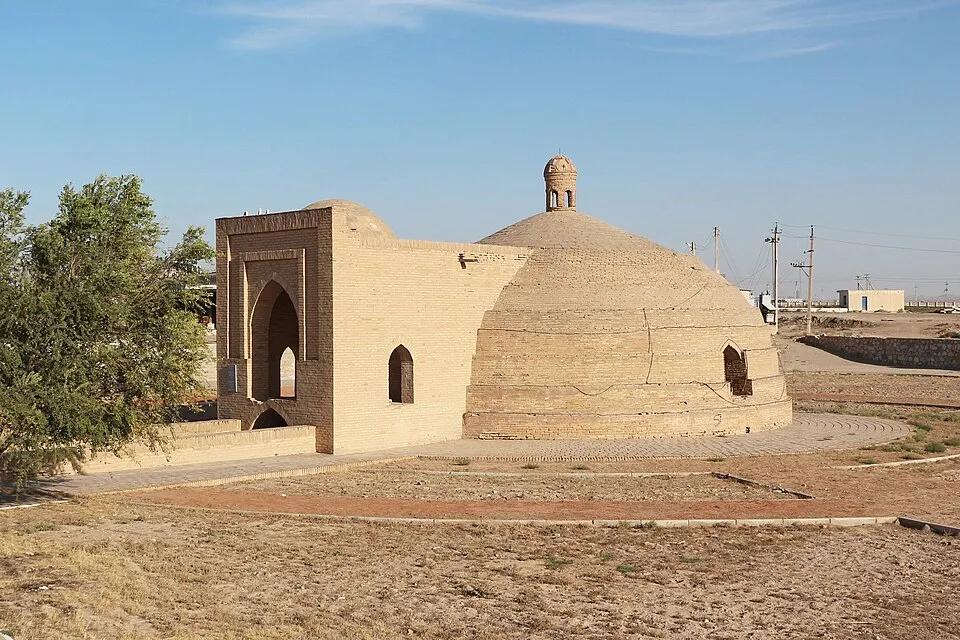
A dome beside a desert road can tell a story as important as a palace. At Malik sardoba, near the Rabati Malik caravanserai in today's Navoi region, the question is wonderfully practical: how did people keep water available along a demanding journey?
This is a useful stop on the road towards Bukhara precisely because it changes the scale of the Silk Road story. Trade depended on storage, maintenance and access to water as much as on valuable cargo.
1. Start with the reservoir beneath the dome
The International Institute for Central Asian Studies describes a sardoba as a domed cistern and Malik as a partly underground water-storage structure. The dome covers a reservoir; the steps provide access to it. Look at the relationship between the entrance, the brick shell and the space below ground before concentrating on the silhouette.
Covering water reduces direct exposure to sun and wind. That makes environmental sense in an arid setting, but it does not turn a cistern into a refrigerator. The monument's documented purpose is water storage and supply. Claims about ice production or refrigerated caravan food require separate evidence.
2. Read the cistern and caravanserai together
The nearby caravanserai and sardoba make a particularly clear pair: accommodation and a water supply belong in the same account of travel infrastructure. The Islamic Civilization Center in Uzbekistan identifies both with the Silk Roads: Zarafshan–Karakum Corridor, inscribed on the World Heritage List in 2023.
Malik stands outside Bukhara city, so describe it as a stop along the Bukhara road rather than an old-town attraction. Putting it on a transfer itinerary also avoids an unnecessary return journey solely for a short monument visit.
3. Ask where the water came from
The most useful question for a guide is about this particular reservoir's supply and maintenance. Other sardobas could collect rain or river water: Uzbekistan's Fergana–Syrdarya Corridor submission describes those possibilities for such structures. It does not establish that every cistern used the same arrangement.
Ask which channels or associated remains can still be identified at Malik. Separate visible fabric, archaeological interpretation and a modern explanation of how a cistern works. A well-framed visit can leave a question open without losing its interest.
4. Make a short stop feel worthwhile
Begin with a view of the exterior, then examine the entrance from the permitted visitor area. Compare the human scale of the stairs with the size of the covered tank. A few minutes spent understanding those relationships can be more memorable than another photograph taken without context.
Treat historic steps and edges cautiously. A surviving reservoir is not a drinking-water source for visitors, and an open entrance is not an invitation to cross a barrier or descend into an unmanaged space.
Travel Tip
Ask your driver to include Malik sardoba and Rabati Malik together on a Samarkand–Bukhara transfer, with a safe stopping place and current access confirmed. Carry your own water, a sunhat and shoes with grip. Keep the visit flexible in extreme heat.
Browse Minzifa Travel's tours, or ask the team to fit this water-heritage stop into your route.
Sources and further reading
- IICAS: Caravanserai, sardoba and Sardoba Malik
- Islamic Civilization Center: Rabati Malik and its sardoba
- UNESCO: Fergana–Syrdarya Corridor, including Kaynar Sardoba
Cover photo: Malik sardoba, a covered water cistern in Uzbekistan. Source: Sardoba Malik 02.jpg. Credit: Bgag. License/status: CC0.
Comments
Leave a comment
No comments yet. Be the first to share your thoughts!