Inside an Uzbek Tandoor: Clay, Stored Heat and the Making of Non
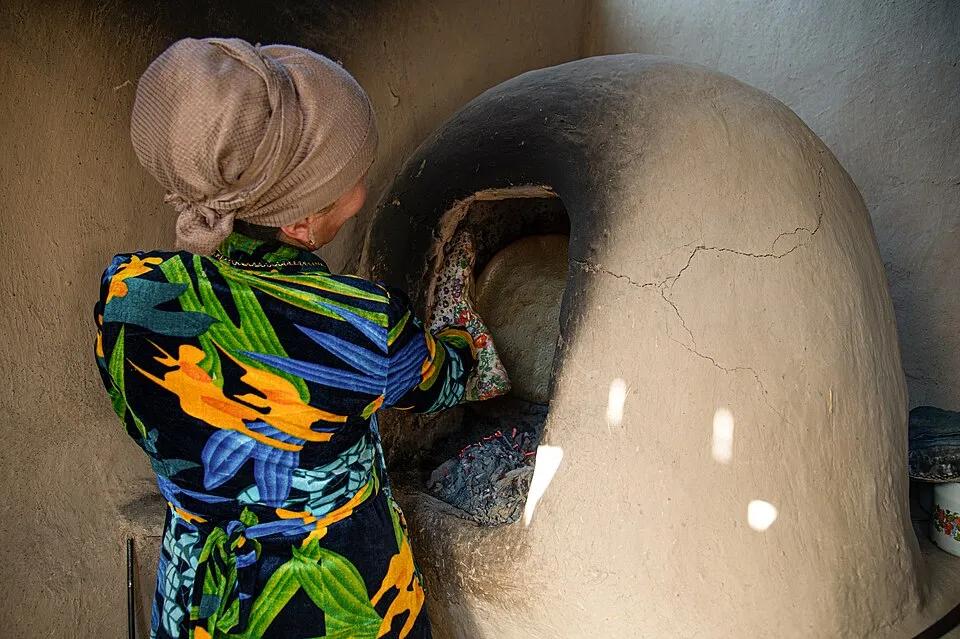
Watch a baker for a few minutes and the tandoor stops looking like a simple clay container. Dough is shaped, the oven is judged, a loaf is placed against the wall and the next movement begins. The process depends on material, heat and practiced timing.
For visitors, that sequence is more revealing than a list of supposedly secret ingredients. A good bakery visit lets you see decisions being made—and then enjoy the result while it is fresh.
1. Understand the oven before the loaf
A tandoor, often called a tandir locally, has a thick clay body that receives heat from a fire. The heated walls become part of the baking environment. Bread attached to the inner surface is heated through contact with that surface as well as by radiant heat and hot air.
Uzbekistan's national tourism portal describes traditional ovens made with locally available earth and added fibres, as well as clay coatings. Recipes and construction practices vary. One workshop's clay mixture should not be advertised as a formula used by every maker in the country.
2. Notice how the fire becomes baking heat
The dramatic flame is only one stage. In the process described by the tourism portal, the baker heats the oven before loading the bread after the large fire has subsided. Watch how the baker assesses the oven rather than assuming a flame must always be visible.
Stored heat helps explain why several loaves can be baked in succession. It also explains why the opening remains hazardous when the fire looks quieter. A visitor should never test the temperature by reaching towards the wall or copying the baker's movements without instruction.
3. Follow the loaf from hand to wall
Ask to see shaping, the patterned central area and the moment the dough is attached inside. A chekich, the stamping tool familiar from Uzbek bread, makes a pattern in the dough. Let the baker explain its role in that particular loaf rather than treating decoration as proof of an ancient symbolic code.
Different breads can have different proportions of rim and centre, textures and finishes. Compare two examples if available. Describe what you actually taste—crust, softness, density—before trying to rank an entire city's baking tradition from one purchase.
4. Keep the explanation grounded
The oven's shape serves a craft built around heat, loading and use. Claims that every curve encodes sacred geometry need evidence that a working bakery demonstration cannot supply on its own.
There is still plenty to discuss: who built the oven, how long it takes to prepare for baking, what makes a batch ready and how the baker learned. These concrete questions give the craftsperson room to speak from experience.
5. Choose the kind of visit you want
A quick purchase, an observation visit and a hands-on class are different arrangements. A busy commercial baker may welcome a sale while having little time to supervise beginners. Ask before photographing people, and keep clear of the oven mouth, tools and flour preparation area.
Travel Tip
Arrange a demonstration in advance and confirm whether you will watch, shape dough or actually load bread. Tell the host about relevant dietary needs before booking. Ask Minzifa Travel to include a bakery visit in an Uzbekistan tour, with enough time for the baker's normal rhythm.
Sources and further reading
- Uzbekistan Travel: Uzbek flatbread and tandoor construction
- Visit Uzbekistan: a Samarkand bread baker's family craft
- Craft & Culture: traditional Samarkand bread-baking workshop
Cover photo: Bread baking at a clay tandoor in Uzbekistan. Source: An Uzbek woman baking bread in a tandoor.jpg. Credit: Sinchalak Musulmon. License/status: CC BY-SA 4.0. Web-optimised photograph remains available under the stated share-alike licence.
Comments
Leave a comment
No comments yet. Be the first to share your thoughts!